Last updated October 15, 2026
The Complete Guide to ADU in Woodland Hills
Most Woodland Hills homeowners who stall on their ADU don’t stall because of money. They stall because they asked a contractor to quote a project before they knew what the city would actually approve on their specific lot. That’s the quiet bottleneck in this neighborhood, and it plays out the same way every time: a homeowner gets excited about a two-story unit, calls three builders, receives wildly different estimates, and then freezes when the city’s hillside setback requirements shrink the buildable envelope by forty percent. This guide walks through every stage of an ADU project in Woodland Hills in the order it actually happens, not the order that sounds good in a brochure. You’ll learn what to check before anyone draws a line, what the permit office actually cares about, and how to keep your budget from drifting once a crew is on site.
Quick Answer
An ADU in Woodland Hills is a legally permitted secondary dwelling on your existing residential lot, and most projects here cost between $180,000 and $420,000 depending on size, site conditions, and whether you build stick-framed or choose a prefab path. The process follows a fixed sequence: zoning check, utility capacity review, design, permit submittal, construction, and final inspection. The fastest way to a realistic price is to confirm what your lot can support first, then request written, line-item pricing from a builder who has worked through Woodland Hills hillside and fire-zone requirements before-our How to Hire a ADU Contractor in Woodland Hills: A Step-by-Step Guide walks through exactly what to look for.
Table of Contents
- Why Woodland Hills Lots Are Different From the Rest of LA
- The Exact Sequence: What Happens First, Second, and Why Order Matters
- Utility Capacity: The Step Everyone Skips Until It Costs Them
- The Three ADU Types Approved in Woodland Hills (and Which One Fits Your Goal)
- What Written Pricing Actually Protects You From
- Your Permit Cleared. Now What? The Week Before Construction
- What to Expect During the Build: A Room-by-Room Reality Check
- Prefab and Modular ADUs in Woodland Hills: When They Make Sense
Why Woodland Hills Lots Are Different From the Rest of LA
Woodland Hills sits against the Santa Monica Mountains, and that geography changes the ADU math. A flat lot in Reseda follows one set of rules. A sloped lot south of Ventura Boulevard follows another. If your property has any grade change at all, the city’s hillside grading ordinance may apply, which affects setbacks, retaining wall requirements, and how much soil can be disturbed before you trigger a more involved review. We’ve had clients on flat streets near the Woodland Hills Country Club who assumed hillside rules didn’t apply to them, and they were mostly right. But move a few blocks toward the Santa Monica Mountains Conservancy trailheads, and the conversation changes quickly.
The second variable is the Los Angeles County Fire Department’s Very High Fire Hazard Severity Zone overlay. Large portions of Woodland Hills fall into this designation. What it means for an ADU is this: your driveway may need to meet specific width and turnaround standards so a fire engine can access the structure. Your exterior materials may face ignition-resistant requirements. If your ADU sits near wildland vegetation, you may need to maintain a defensible space buffer. These are not optional suggestions, and they are not always obvious on a standard parcel search. The city’s planning counter can confirm your zone and overlay status in one visit.
There’s also the practical reality of tree protection. Mature oaks and sycamores are common throughout Woodland Hills, and the city takes protected tree removal seriously. If your ADU site requires removing or trenching near a protected tree, that’s a separate permit and sometimes an arborist report. None of this makes an ADU impossible. It does mean that a builder who has only worked flat, inland lots may not anticipate what a Woodland Hills site requires. At Seedling ADU Woodland Hills home, our estimating process starts with a site walk that includes checking for these overlays before we quote anything, because the worst time to discover a fire-zone requirement is after the foundation is marked.
The Exact Sequence: What Happens First, Second, and Why Order Matters
The order of operations for an ADU is not a suggestion. It’s the thing that separates a twelve-month project from a thirty-month project. Here’s the sequence we walk every client through, and why each step exists.
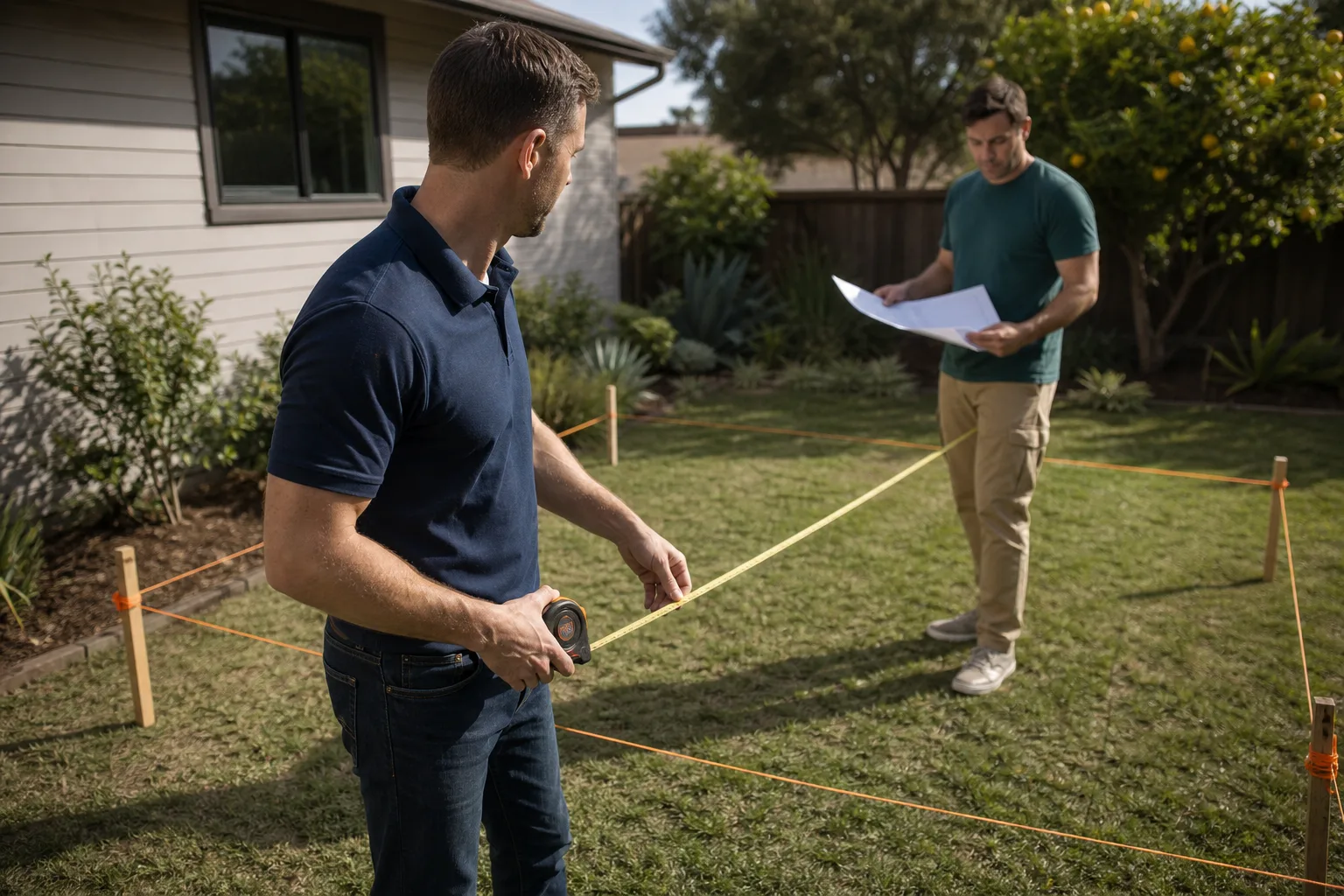
- Zoning and overlay check. Before design, before budget, before anything. Confirm your lot’s zoning, hillside status, fire zone designation, and any historical or environmental overlays. This tells you the maximum size, height, and placement of your ADU. Cost: often free at the planning counter or a small fee for a formal zoning letter.
- Utility capacity review. Confirm whether your existing sewer line, water meter, and electrical panel can support a second dwelling. See the next section for why skipping this is the most expensive mistake in Woodland Hills.
- Design and feasibility. Now, and only now, does it make sense to involve a designer or a builder’s design team. With the zoning envelope and utility constraints known, the design fits the actual site instead of a fantasy version of it.
- Permit submittal. Plans go to Los Angeles Department of Building and Safety. Expect plan check comments. Expect revisions. Some Woodland Hills ADU permits clear in eight weeks; others take five months, especially on hillside lots.
- Build phase. Foundation, framing, rough-in, drywall, finishes, final inspection. This is where the Cedarwell Care Promise matters: shoe covers and drop cloths inside the home, pet-safe products where there’s a choice, and a photo of the clean-up before the crew leaves each day.
Why does order matter this much? Because every step depends on the one before it. A designer who draws a 1,200-square-foot unit on a lot that can only support 800 square feet has wasted your design fee. A builder who quotes a standard foundation on a hillside lot with retaining wall requirements has underpriced the job, and you’ll hear about it mid-project. When families tell us their ADU stalled, it’s almost always traced back to a skipped step, not a lack of budget. If you’re already thinking about a larger project alongside the ADU, our Home Addition Contractor in Woodland Hills guide covers how additions and ADUs interact on the same parcel.
Utility Capacity: The Step Everyone Skips Until It Costs Them
The single most expensive surprise in Woodland Hills ADU construction has nothing to do with lumber prices. It’s sewer line depth and electrical panel capacity. Older Woodland Hills homes, especially those built in the 1950s and 1960s on streets north of the Boulevard, often sit on sewer laterals that are shallow or made of aging clay pipe. An ADU that adds a full bathroom and kitchen may require a new sewer lateral, and if that lateral runs under the existing house or under a mature tree, the cost jumps by ten to twenty thousand dollars. This is not a hypothetical. We’ve seen it on lots near Warner Center and on quiet cul-de-sacs east of Topanga Canyon Boulevard.
Electrical panels are the second common bottleneck. Many Woodland Hills homes still run 100-amp panels. An ADU with a mini-split system, electric range, washer-dryer, and lighting can easily require 60 amps by itself. If your panel can’t support that, you’ll need a panel upgrade or a subpanel, which adds margin to the bid. It’s a known cost and a manageable one, but only if it’s identified before the permit goes in. If it’s discovered during rough-in, it delays the job and changes the written price.
Water is usually the least troublesome of the three. Most Woodland Hills lots have adequate water pressure and meter capacity for a second dwelling. The exception is a fire-zone lot where the ADU adds to the home’s overall fire suppression considerations. Regardless, a competent contractor checks all three utilities during feasibility, not after the foundation is poured. This is a concrete example of what a proper ADU Builders in Woodland Hills process looks like: the boring, unglamorous checks happen first, and the exciting design conversation happens second.
The Three ADU Types Approved in Woodland Hills (and Which One Fits Your Goal)
California state law allows three basic ADU configurations, and all three are legal in Woodland Hills. The right choice depends less on what you can build and more on who will live there and how the unit will be used.
1. Detached ADU (Standalone New Construction)
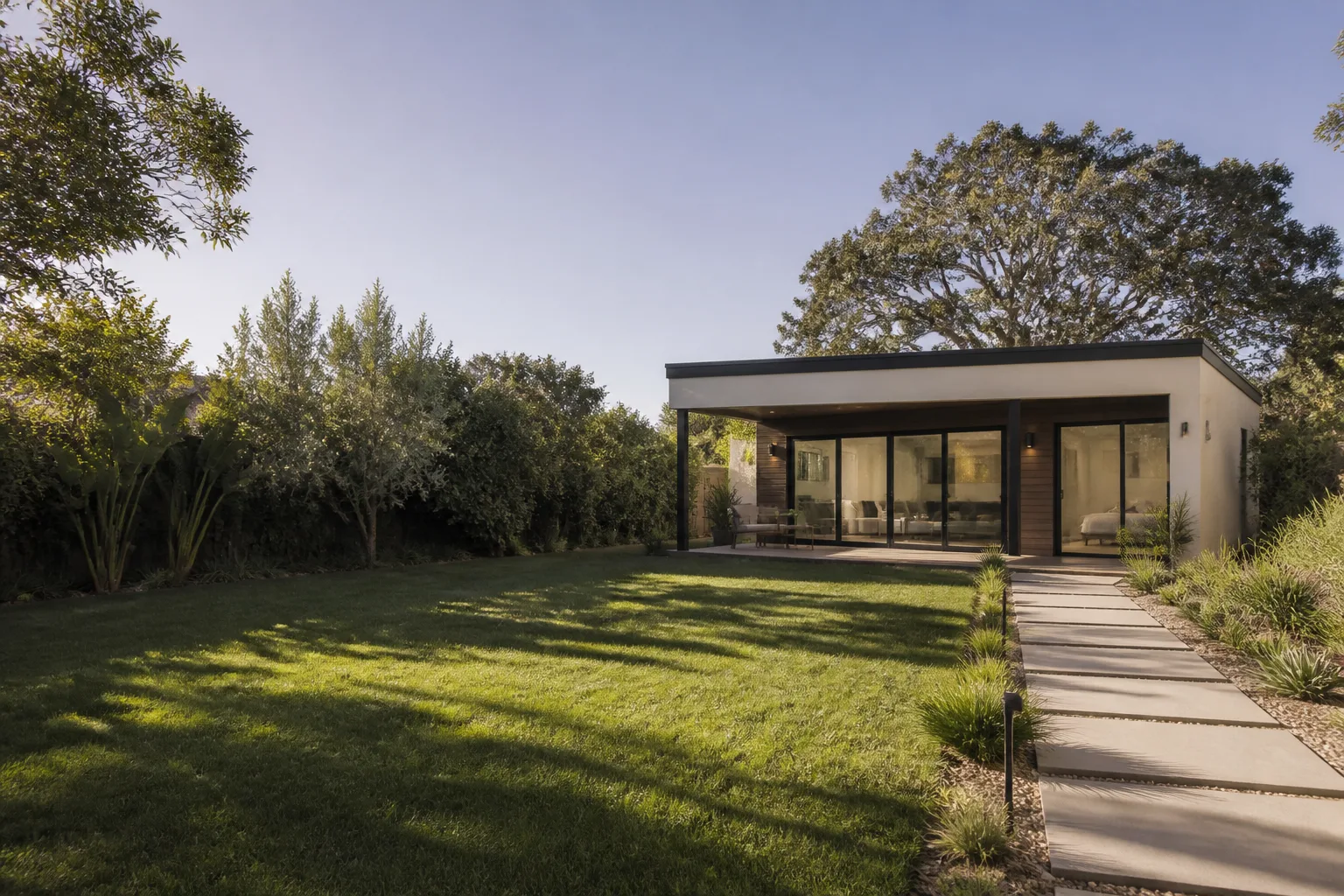
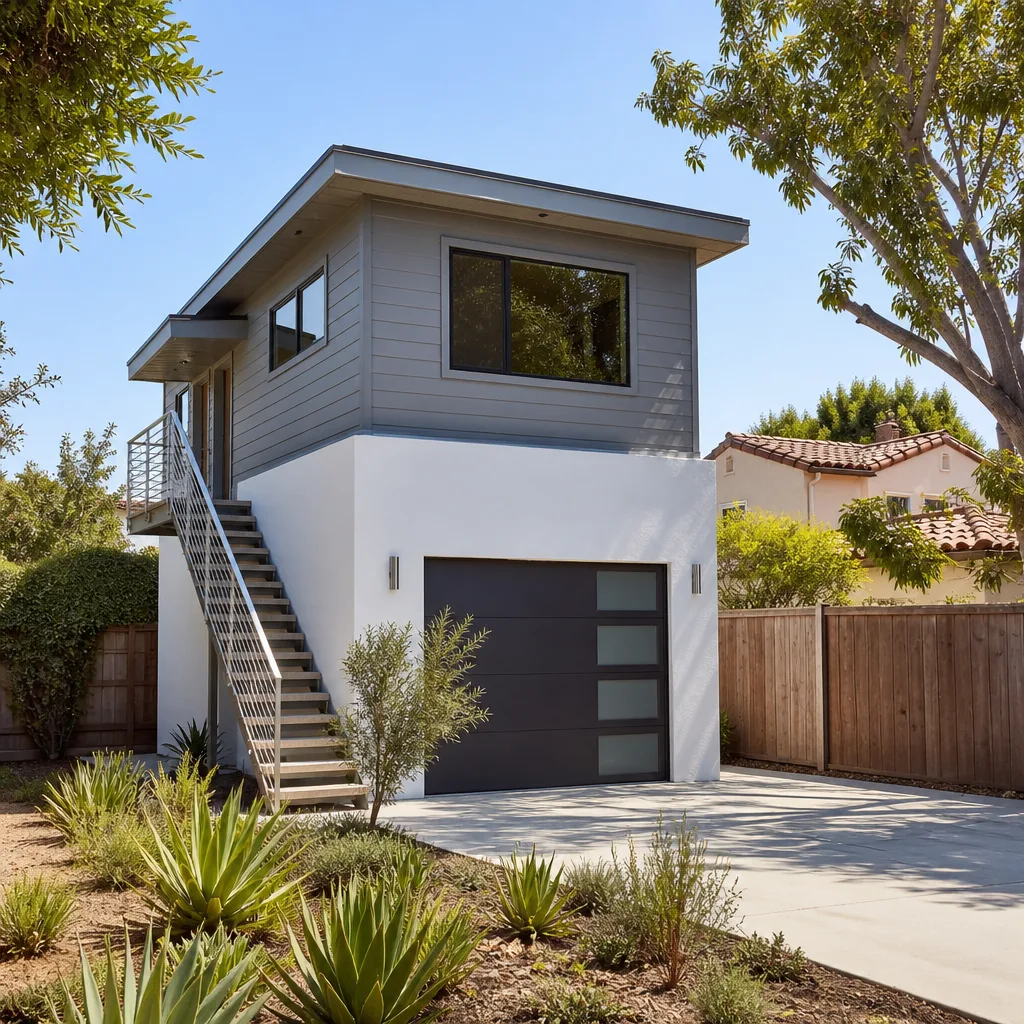
A separate structure in the backyard, typically 500 to 1,200 square feet. This is the most flexible option for rental income, because the tenant has complete separation from the main house. It’s also the most expensive per square foot, since you’re paying for a full foundation, all four exterior walls, and separate utility runs. On a flat Woodland Hills lot with good access, a detached ADU is straightforward. On a sloped lot, expect retaining walls and possibly deeper footings, which pushes the price toward the top of the range.
2. Garage Conversion ADU
Converting an existing attached or detached garage into a living unit. This is often the best value in Woodland Hills because the shell already exists, the foundation is in place, and the permitting path is established. The tradeoff is that you lose garage storage and parking, though the city does not require you to replace the parking space for a garage conversion ADU under most circumstances. For a family hosting a parent who needs to be close but still private, a Garage Conversion Contractor in Woodland Hills can usually deliver this at a meaningfully lower price than new construction.
3. Attached ADU (Addition or Junior ADU)
An attached ADU is a legal dwelling either added as an extension of the main house or carved out of existing interior space. A Junior ADU (JADU) is the smaller version, typically created within the footprint of the existing home, often from a converted bedroom or bonus room. Attached units work well when the lot is small, when the budget is tighter, or when the goal is having a parent close by with shared laundry and a connecting door.
Which one pencils out for your situation? If the goal is rental income, the detached ADU gives you the highest rent and the cleanest separation, but it costs more up front. If the goal is housing a parent or an adult child, the attached ADU or JADU often makes more sense because shared walls, shared systems, and smaller square footage reduce both construction cost and ongoing utility cost. A garage conversion sits in the middle: strong rental income, lower construction price, but you give up the garage.
| ADU Type | Typical Woodland Hills Cost Range | Best For |
|---|---|---|
| Detached ADU (new construction) | $250,000 – $420,000 | Rental income, maximum privacy |
| Garage Conversion ADU | $140,000 – $220,000 | Parent housing, budget-conscious rental |
| Attached ADU / Junior ADU | $120,000 – $200,000 | Multi-generational living, small lots |
These ranges reflect what we’ve seen on Woodland Hills sites with typical site conditions. Hillside lots, fire-zone requirements, protected trees, or major utility upgrades move a project toward the high end or beyond.
What Written Pricing Actually Protects You From
In ADU construction, the scariest sentence a homeowner can hear is “we’ll figure that out when we get there.” That sentence, delivered during framing or rough-in, is how a $200,000 project becomes a $280,000 project. Written pricing before a tool is picked up is the single strongest protection against the drift. Here’s what a legitimate written price looks like.
- Line items for site work. Excavation, grading, retaining walls if needed, tree protection, and haul-away. On a Woodland Hills hillside lot, site work can be twenty percent of the entire project. It should be its own line item, not buried in “general conditions.”
- Line items for utilities. Sewer lateral connection or replacement, water line extension, electrical panel upgrade or subpanel, and gas line if applicable. Each gets its own number.
- Line items for city fees. Permit fees, plan check fees, school district fees (yes, ADUs trigger school fees in many cases), and any fire department review fees.
- A written allowance for finishes. Flooring, tile, paint, fixtures. The allowance should specify exactly what quality level it covers, so you don’t walk into a showroom and discover the allowance buys builder-grade everything.
- An explicit list of what is NOT included. Landscaping, fencing, window coverings, appliances, and anything else outside the scope. A good written price tells you what you are not buying as clearly as what you are.
The difference between a written price and a verbal estimate is enforceability. When our team at Seedling puts a price in writing, it means the estimator walked the site, checked the utility panel, looked at the sewer cleanout, and accounted for the slope. It means the price reflects that specific lot in Woodland Hills, not a generic ADU price from a construction cost database. And it means that if something on that written list changes, you’ll hear about it before the change happens, not after the invoice is printed.
Your Permit Cleared. Now What? The Week Before Construction
The permit approval letter arrives, and most homeowners think the next step is demolition or excavation. It isn’t. The week between permit approval and the first day of construction is when good builders set the terms for the entire project. Here’s the checklist we walk clients through during that week.
- Read the approval letter line by line. Look for conditions of approval. The city may require a survey monument, a specific erosion control plan, or a pre-construction photo set. Miss a condition, and the inspector will catch it at the first inspection, which stalls the project.
- Confirm the utility shutoff plan. Will the water be off for an afternoon or a day? Will the power go down during the panel upgrade? Families with kids and pets need to plan around this, and the builder should tell you the schedule before it happens, not the morning of.
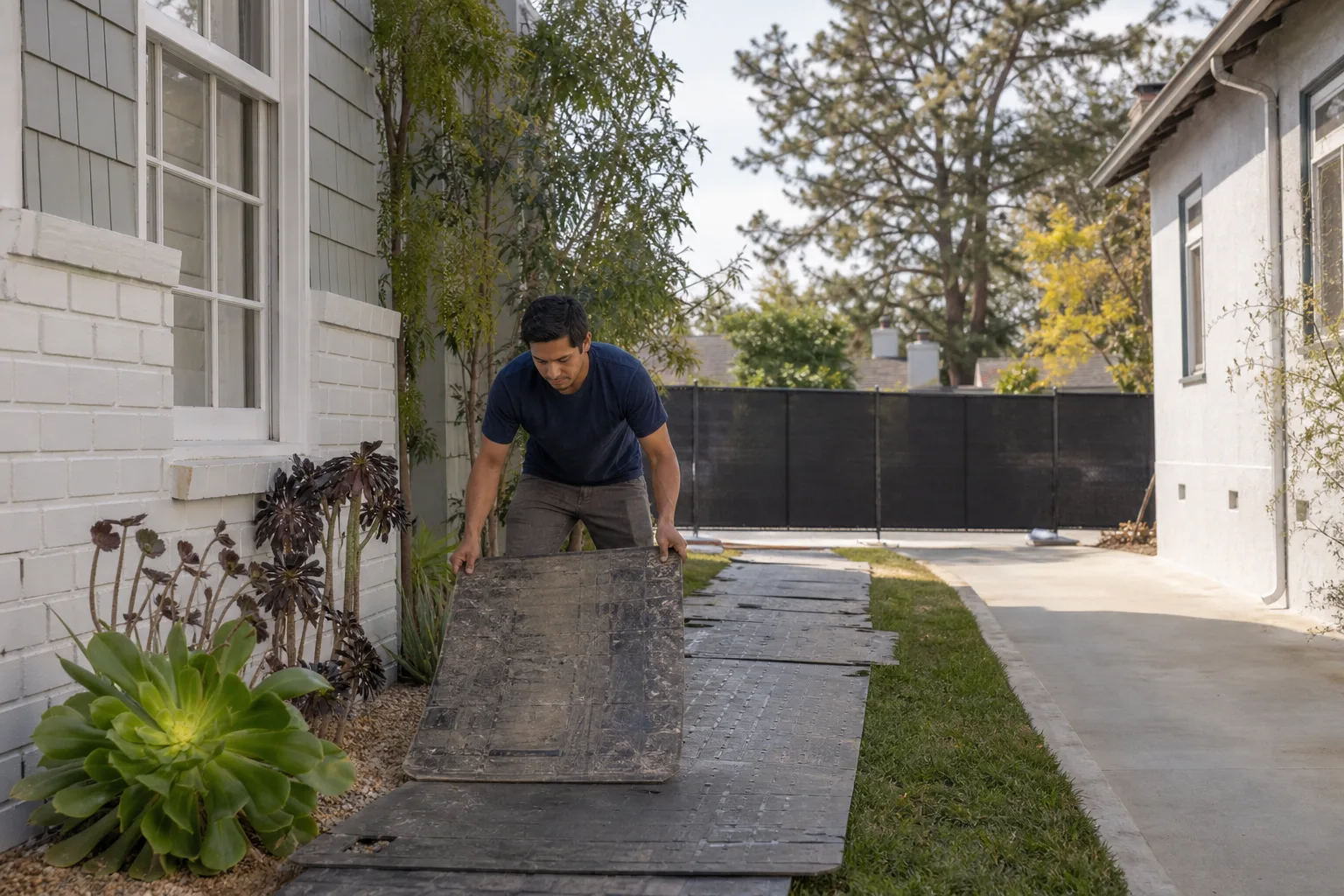
- Walk the access path. Where will materials come through the side gate? What happens to the landscaping along the path? On Woodland Hills lots with mature plantings, this is a real conversation. The builder should protect what can be protected and tell you honestly what can’t.
- Establish the daily routine. What time does the crew arrive? Where do they park? Where do they stage materials? How do they enter the house if they need to access a panel or a wall? A crew that respects the family’s rhythm, especially during school hours and nap times, is a crew that communicates before it touches anything.
- Confirm the clean-up standard. You should know, in writing, what “clean” means at the end of each day. Drop cloths in any interior space the crew touches. Shoe covers if they come inside. A photo of the site before they leave. If the builder can’t commit to that on day one, they won’t commit to it on day sixty.
This pre-construction week is where the Cedarwell Care Promise gets real. It isn’t a marketing line. It’s the difference between a project that respects your home and a project that treats your home as a construction site. And it’s the reason we tell Woodland Hills homeowners to judge a builder as much by the pre-construction conversation as by the portfolio photos.
What to Expect During the Build: A Room-by-Room Reality Check
An ADU build changes the daily life of your household, and the families who handle it best are the ones who knew what to expect before the first truck pulled up. Here’s what actually happens inside your home and on your property during the phases of construction, in plain terms.
The foundation phase is noisy and dirty in the backyard. Excavation equipment, concrete trucks, and rebar work. Inside the house, the impact is usually minimal, but you’ll hear it. If you have a dog, the backyard becomes off-limits for a period. If you work from home, plan calls around the excavation and concrete pour days. A thoughtful builder schedules the loudest work on days that work for you, not just for the crew.
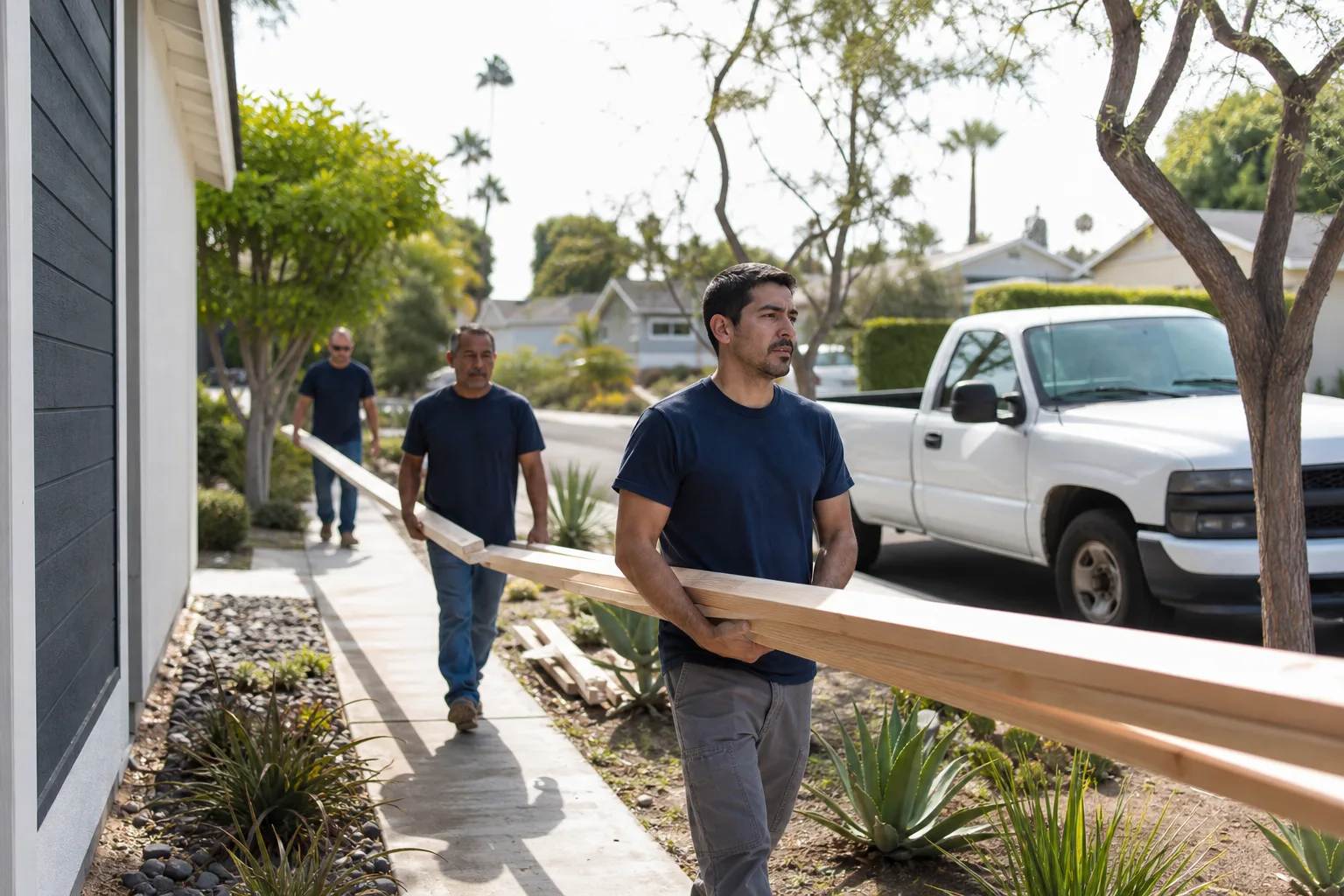
The framing phase moves quickly and is genuinely exciting. The ADU’s shape appears in a matter of days. Lumber deliveries happen early in the morning, and on narrow Woodland Hills streets, this can briefly affect parking. Your builder should give you a delivery schedule so you’re not surprised by a flatbed across your driveway at 7 a.m.
The rough-in phase is when utilities are extended and the mechanical systems go in. This is the phase where the crew may need to enter the main house to access the electrical panel, the water heater, or an interior wall. This is also the phase where the quality difference between a careful builder and a rushed builder becomes visible. We send uniformed, background-checked technicians into your home, and they wear shoe covers and lay down drop cloths every single time. It’s a small thing that tells you a lot about how the rest of the project will go.
The drywall and finish phase is the long tail. Taping, mudding, sanding, painting, flooring, tile work, and fixtures. Dust control matters here more than anywhere. A builder using proper dust barriers and negative air keeps drywall dust from migrating into your living room and settling on your couch and your kids’ toys. Some dust is unavoidable on any construction site, but a careful builder contains it, and that containment is part of the job, not an extra.
Throughout the build, the communication standard matters. You should know, every week, what happened, what happens next, and where the budget stands. If the builder goes quiet for two weeks, something is wrong, and it’s usually a scheduling problem the builder doesn’t want to talk about. The families who stay happiest during an ADU build are the ones whose builder answers the phone when they call. Not a voicemail tree. A person.
Prefab and Modular ADUs in Woodland Hills: When They Make Sense
Woodland Hills has become one of the better Los Angeles markets for prefab and modular ADU construction, and for good reason. Prefab moves a large portion of the construction off your lot into a factory, which reduces on-site disruption and shortens the on-site phase significantly. For families with kids and pets, that’s a meaningful difference. Less time with a construction site in the backyard means less stress on the household.
We work directly with several leading prefab brands, including Abodu, Cover, and Dvele, and the right choice depends on the site. Abodu’s units are well-suited to straightforward flat lots where the design is clean and the installation is efficient. Cover builds panelized systems that perform well on lots where access is constrained, because the panels arrive flat and assemble on site. Dvele is a stronger fit for homeowners who want a higher-end finish level and are willing to spend more per square foot. None of these brands is universally better than the others. They solve different problems.
Prefab also pairs well with James Hardie siding and trim products, which we use frequently on Woodland Hills ADUs for durability in the local climate. The valley heat and the dry season are hard on exterior materials, and Hardie’s fiber cement products hold paint longer and resist warping better than wood in this microclimate. When a prefab unit arrives and gets its exterior finish installed on site, the material choice matters for how the ADU looks in year five, not just on move-in day.
The prefab path isn’t right for every Woodland Hills lot. Hillside sites with complex grading, fire-zone requirements, or difficult crane access can make prefab less practical. But for the right lot, it’s a legitimate way to build a durable, beautiful ADU with less on-site chaos. We help families evaluate the tradeoffs honestly, because the goal is the right ADU for the lot, not the ADU the builder prefers to sell.
Common Mistakes to Avoid
- Skipping the zoning check before hiring a designer. A designer who doesn’t know the buildable envelope of your Woodland Hills lot is drawing on faith. Confirm the zoning envelope first, then design inside it.
- Ignoring the sewer lateral. On older Woodland Hills lots, the sewer line is the silent budget killer. Get it scoped or at least visually assessed before any price is finalized.
- Assuming a flat, inland ADU bid applies to a hillside lot. Slopes, retaining walls, and fire-zone requirements change the price. A bid from a builder who hasn’t walked your actual lot is a guess, not a quote.
- Choosing the cheapest bid without comparing line items. One bid includes site work, utility upgrades, and finishes. Another buries them in allowances. The lower number is often the less complete number.
- Not reading the approval letter’s conditions. The city often attaches conditions to ADU permits in Woodland Hills. Miss one, and you’ll fail the first inspection and lose weeks.
- Not asking how the crew treats the inside of your home. If the ADU requires interior access to the main house, the builder’s standard for shoe covers, drop cloths, and clean-up matters. Ask before you sign, not after the first muddy boot print.
- Designing for resale instead of for your actual life. An ADU is a long-term fixture. Build the unit that fits how your family will actually use it for the next decade, not the one that sounds best on a listing description.
When to Call a Professional
An ADU is not a do-it-yourself project, and in Woodland Hills, the stakes are higher than in flatter, simpler markets-something we explore in our DIY vs Professional ADU: The Woodland Hills Homeowner’s Decision Guide. Hillside grading, fire-zone overlays, protected trees, aging sewer laterals, and the Los Angeles Department of Building and Safety’s plan check process all reward experience and punish guesswork. If you have a slope anywhere on your lot, if your home was built before 1970, or if you’re unsure whether your lot lies in a Very High Fire Hazard Severity Zone, call a builder before you pay for a design. The site walk costs you nothing and tells you what’s actually possible. Seedling ADU Woodland Hills offers free estimates in Woodland Hills, and you’ll get a written price before any work begins. Call our team directly: a live person answers, 24/7.
Frequently Asked Questions
A new detached ADU in Woodland Hills typically costs between $250,000 and $420,000, while a garage conversion runs $140,000 to $220,000 and an attached or junior ADU ranges from $120,000 to $200,000. Hillside lots, fire-zone requirements, protected trees, and utility upgrades push a project toward the higher end. The best way to get an exact number for your lot is to schedule a free site walk and receive written, line-item pricing. Call (559) 249-3776 to set that up.
Plan for twelve to eighteen months from first site visit to final inspection, with hillside lots and fire-zone reviews adding time to the permit phase. The construction phase itself typically runs five to nine months. The single biggest timeline variable is the permit process, which depends on how complete the plans are and how many plan check comments the city issues.
Yes. Even a straightforward garage conversion requires a building permit, and most conversions also require electrical, plumbing, and mechanical permits. Converting a garage without permits creates a legal and insurance problem when you eventually sell, and an unpermitted unit is not a legal rental in the city of Los Angeles.
Yes, but it will likely cost more and take longer than a flat-lot ADU. Hillside lots may require retaining walls, deeper footings, additional grading, and compliance with the city’s hillside ordinance. Fire-zone requirements may also add driveway width standards and ignition-resistant material requirements. A site walk with an experienced builder will tell you exactly what applies to your specific lot.
No. Under current California state law, a garage conversion ADU does not require replacement parking in most circumstances. This makes garage conversions one of the most cost-effective ADU paths in Woodland Hills, where the existing structure and foundation already count for a large share of the construction cost.
Yes, but usually only on the added value of the ADU, not the entire property. The county assessor re-assesses the property when the ADU is completed, and the new structure’s value is added to your assessed value under Proposition 13 rules. The increase is typically smaller than many homeowners expect, but it’s a real ongoing cost worth factoring into your rental income math.
The Bottom Line
An ADU in Woodland Hills is a significant investment, but it’s one that follows a predictable path when the pieces are handled in the right order. Confirm your lot’s zoning and overlays first. Check the utilities before you design. Get written pricing that shows every line item and tells you what’s not included. Choose the ADU type that fits your actual family need, whether that’s rental income, housing a parent, or creating space for an adult child. And during the build, hold your builder to a standard that respects your home: clean floors, protected spaces, and a live voice on the phone when you call. Done carefully, an ADU isn’t just a construction project. It’s a new home on your lot, built to last in a neighborhood that rewards patience and precision. For more guides & resources on planning your build, visit our blog.
Written by Ben Ortega, Owner at Seedling ADU Woodland Hills, serving Woodland Hills since 2001.