Dvele Site Prep & Utilities: The Woodland Hills Owner’s Guide
Site prep and utility rough-in for a Dvele home in Woodland Hills typically runs between $28,000 and $75,000 installed, depending on trenching depth, soil conditions, and how far your utility connections sit from the street. We keep Dvele-compatible foundation formwork, under-slab plumbing chases, and electrical service stub-ups moving through our Woodland Hills job sites every month, and we can usually have a crew out to assess your lot within the week. Most owners discover a problem when their Dvele delivery date gets scheduled and the site survey reveals the pad isn’t level, the sewer lateral won’t pass inspection, or the trenching permit was never pulled for the gas line. By that point, the clock is running against the factory delivery window, and the fix needs to happen right the first time.
Here’s what you need to know about Dvele site work in this part of Los Angeles, what it costs, and how to tell whether what you’re seeing is a minor correction or a full re-scope.
Key Takeaways
- Typical range: $28,000 – $75,000 for full Dvele site prep and utility connections in Woodland Hills.
- The CA-specific issue: Hillside lots and expansive clay soils in Woodland Hills change grading specs and pier depth requirements.
- What fails first: Trenching and drainage plans that were drawn before the Dvele model was actually selected.
- We are not affiliated with Dvele. We’re an independent ADU and prefab builder with direct experience setting Dvele modules, and we carry our own written pricing and warranty on every phase of the site work.
Which Dvele Models This Applies To
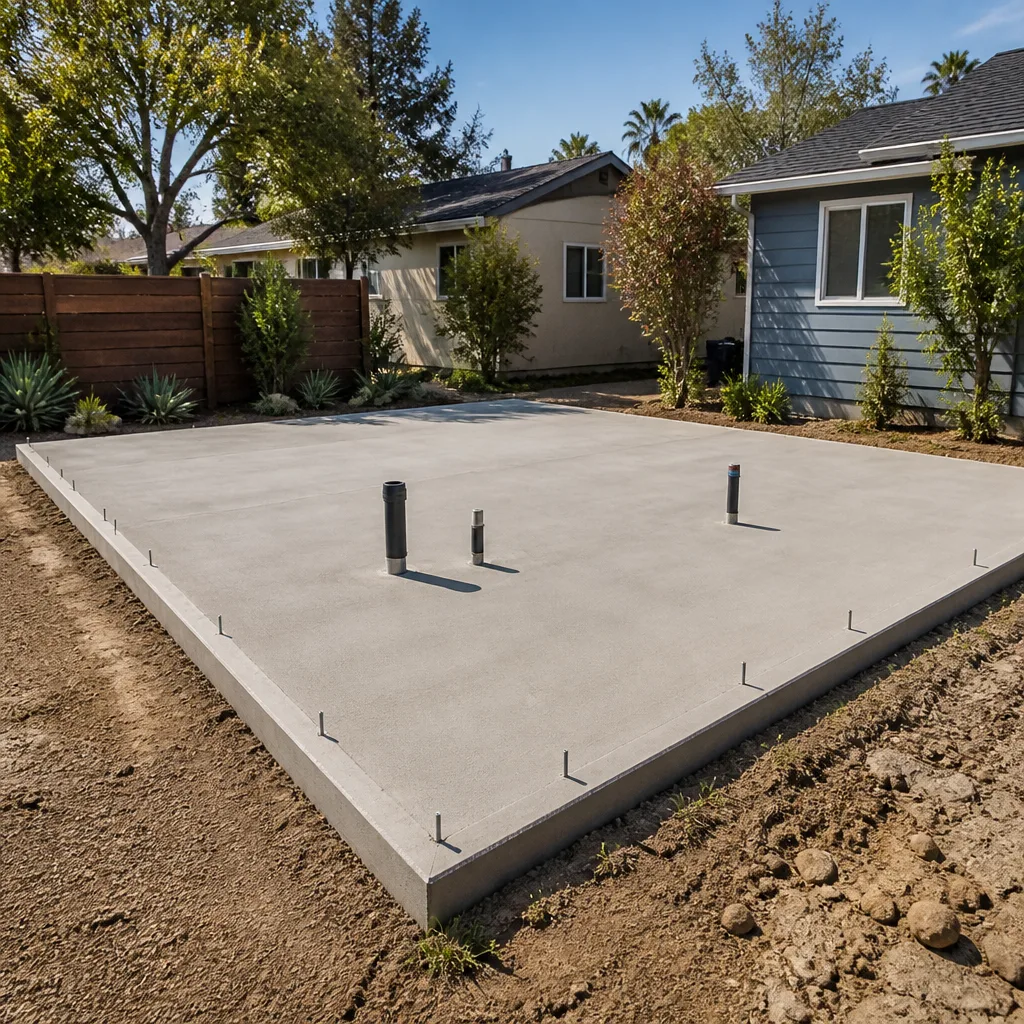
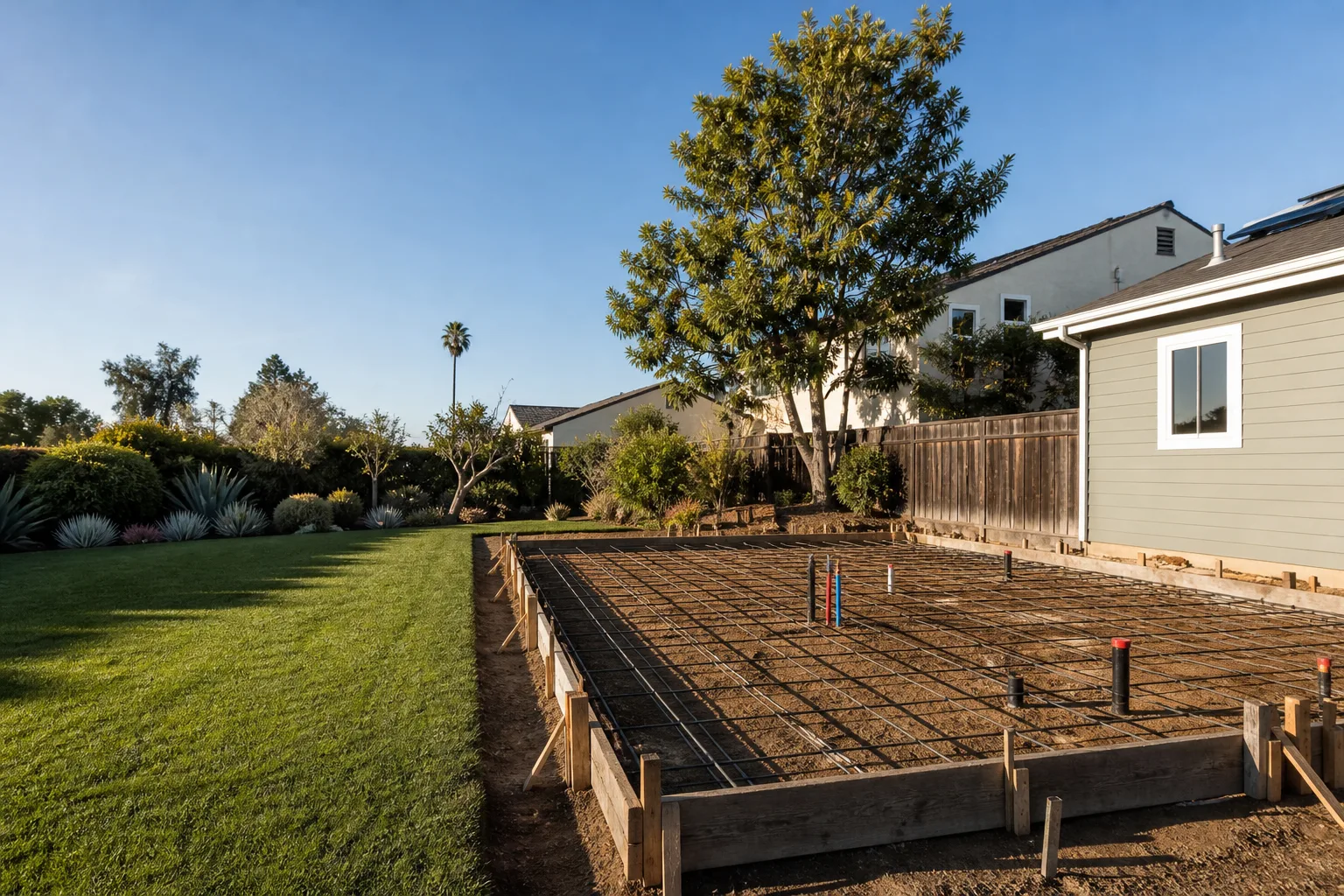
Every Dvele home, whether it’s the Dvele IQ 120, the Dvele Adapt, or a custom module from the Dvele Studio series, sits on the same fundamental requirement: a precisely level reinforced slab or perimeter foundation, with utility stubs placed at exact factory-specified coordinates. Dvele ships each module with a set of foundation and utility coordination drawings. The gotcha we see in Woodland Hills constantly is that the drawings get revised after the homeowner or a prior contractor already pulled permits on an earlier version, and the rough-in is off by 4 to 6 inches. With panelized prefab, 4 inches might as well be 4 feet.
Dvele modules use integrated floor cassettes and chassis beams. That means plumbing and electrical penetrations have to hit designated chase openings, not just “somewhere in the wall.” For the slab, Dvele specs a flatness tolerance of 1/4 inch over 10 linear feet, which is tighter than standard residential slab work. If your Woodland Hills lot has expansive soil, which much of the south-facing hillside does, the geotechnical report may push you from a standard slab to a pier-and-grade-beam system. That changes the entire site prep scope and price.
On the OEM-versus-aftermarket question: there is no “Dvele-branded” sewer lateral or electrical conduit. Dvele coordinates the building module; the site work uses standard Los Angeles Department of Building and Safety approved materials, which means the quality question is about who installs them and whether they read the Dvele utility drawings closely. We spec materials from suppliers we know pass LADBS and LADWP inspection in this area.
We also work with Abodu and Cover modules, so if you’re still deciding between brands, we can compare what each one requires from your lot before you commit.
Signs Your Dvele Site Prep & Utilities Is Failing
Site prep doesn’t fail the way a water heater does. It shows up quietly, usually right before a deadline. Here’s what actually happens on properties around Woodland Hills:
- The slab pad is out of level by more than the Dvele tolerance. You notice standing water pooling near the form boards after rain, or a string line pulled corner to corner shows a visible dip. The cause is usually soil settlement or forms that shifted between the initial pour and the delivery date.
- The sewer lateral fails a LADBS inspection. The camera shows a belly, a root intrusion, or a broken clay section from the 1960s. In older Woodland Hills neighborhoods south of Ventura Boulevard, clay sewer lines are common, and Dvele’s delivery window won’t wait for a repair that should have been scoped months earlier.
- The electrical service stub is in the wrong location for the Dvele panel entry. You or your electrician notice the main panel knockouts don’t line up with the module’s electrical chase. This is the 4-to-6-inch problem we mentioned, and it usually means cutting and repouring a section of slab or running surface conduit that looks terrible.
- Drainage isn’t carrying water away from the pad. After the first real rain, you find water running toward the foundation instead of to the street. In hillside portions of Woodland Hills, poor pad drainage can erode the compacted base under the slab within a single wet season.
- The trenching permit was never finalized. The gas line is run, but the city hasn’t signed off, and Dvele won’t release the module for delivery on an unpermitted utility stub. This one is paperwork, but it stalls the job just the same.
Replacement Cost & What’s Included
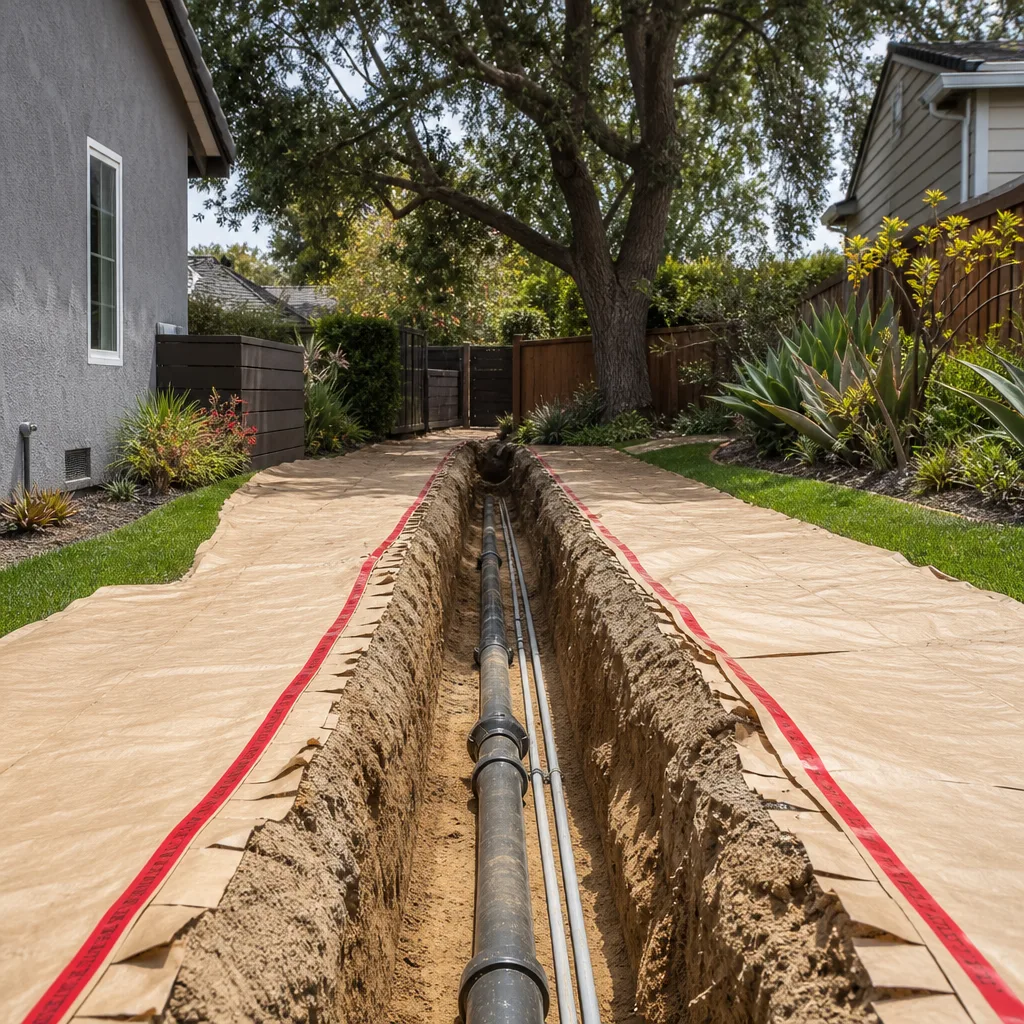
Here’s the Woodland Hills reality, in dollars. A modest flat lot with utilities at the curb, where the only problem is re-trenching a 40 foot sewer line and pouring a repair slab section, lands around $28,000 to $38,000. A hillside lot that needs pier drilling, retaining work, a new 200 amp underground service from a pole across the street, and full regrading pushes toward $55,000 to $75,000. Most jobs fall between those numbers.
| Scope | Typical Woodland Hills Installed Price |
|---|---|
| Sewer lateral replacement (40 – 75 ft) | $8,500 – $16,000 |
| Slab correction / partial repour | $6,000 – $14,000 |
| Electrical service upgrade or relocation | $7,000 – $18,000 |
| Gas line trenching & connection | $4,000 – $9,000 |
| Drainage / grading correction | $5,000 – $12,000 |
| Full site prep from raw lot | $28,000 – $75,000 |
Every line-item quote we give in Woodland Hills includes the permit fees, the trenching, the material, the backfill, the compaction test, and the inspection coordination. You get one written price before we touch anything, and it doesn’t change unless you change the scope. That’s how Ben Ortega runs every site, and it’s the standard the whole crew works to.
The work itself is covered by our 365-Day Done Right Promise. If the compaction settles, if the drainage regrades wrong in the first year, if the utility stub misses the Dvele chase, we come back and make it right at no charge. Written, signed, before the first shovel goes in the ground.
DIY or Call Us?
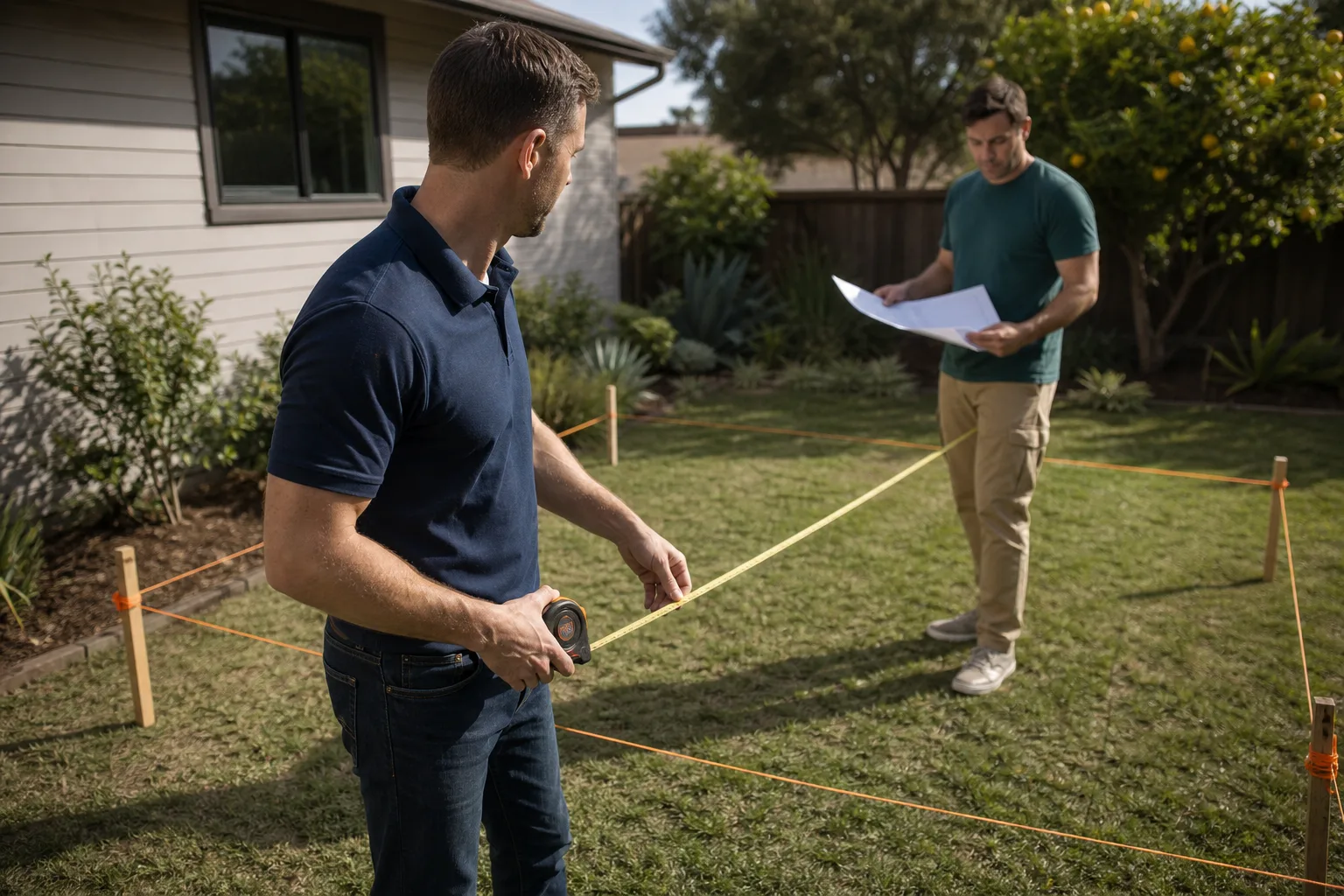
There are two things a homeowner can safely do before calling us. First, pull your Dvele site plan and compare it against what’s actually on the ground with a tape measure and a string line. You’re allowed to know whether the rough-in is off. Second, watch how water behaves on your lot during the next rain. If it ponds near the pad, that’s information we need.
What you should not do yourself: anything involving live electrical service, gas line work, or open trenching deeper than a few feet. A gas line hit in Woodland Hills isn’t a theoretical risk; utility strikes happen every month in this city, and the LADBS and SoCalGas response is not a call you want to make from your own front yard. Trenching without a permit and without a locate request is how people get hurt. Let a licensed contractor with the right insurance and the right survey equipment handle the underground work. Call us at (559) 249-3776 and we’ll bring the plans, the locate tickets, and the written price.
FAQs
Done correctly with proper compaction and drainage, a Dvele slab and utility rough-in should outlast the residential standard of 50+ years, but the weak points in Woodland Hills are drainage erosion and expansive soil movement, so the quality of the grading work matters more than the concrete itself. If water is managed and the geotech report was actually honored, the site work is the last thing you’ll think about after move-in. Call us at (559) 249-3776 if you’re unsure whether your existing pad meets Dvele’s tolerance.
Sometimes a 10 foot section can be spot-repaired with a trenchless liner or a sectioned replacement, at a lower cost than a full lateral replacement, but if your Woodland Hills lateral is old clay and the camera shows multiple breaks, a patch is money wasted. We’ll scope it, show you the footage, and tell you honestly which direction makes sense. Estimates are free.
For a typical single Dvele module on a flat Woodland Hills lot, trenching and utility work runs 5 to 8 working days, and a full slab with grading takes 10 to 14 days including inspections and curing time before delivery. Hillside piers and retaining add another 1 to 2 weeks. We’ll give you a written timeline with the price, and Ben walks everyone through it before a single day of labor is booked.
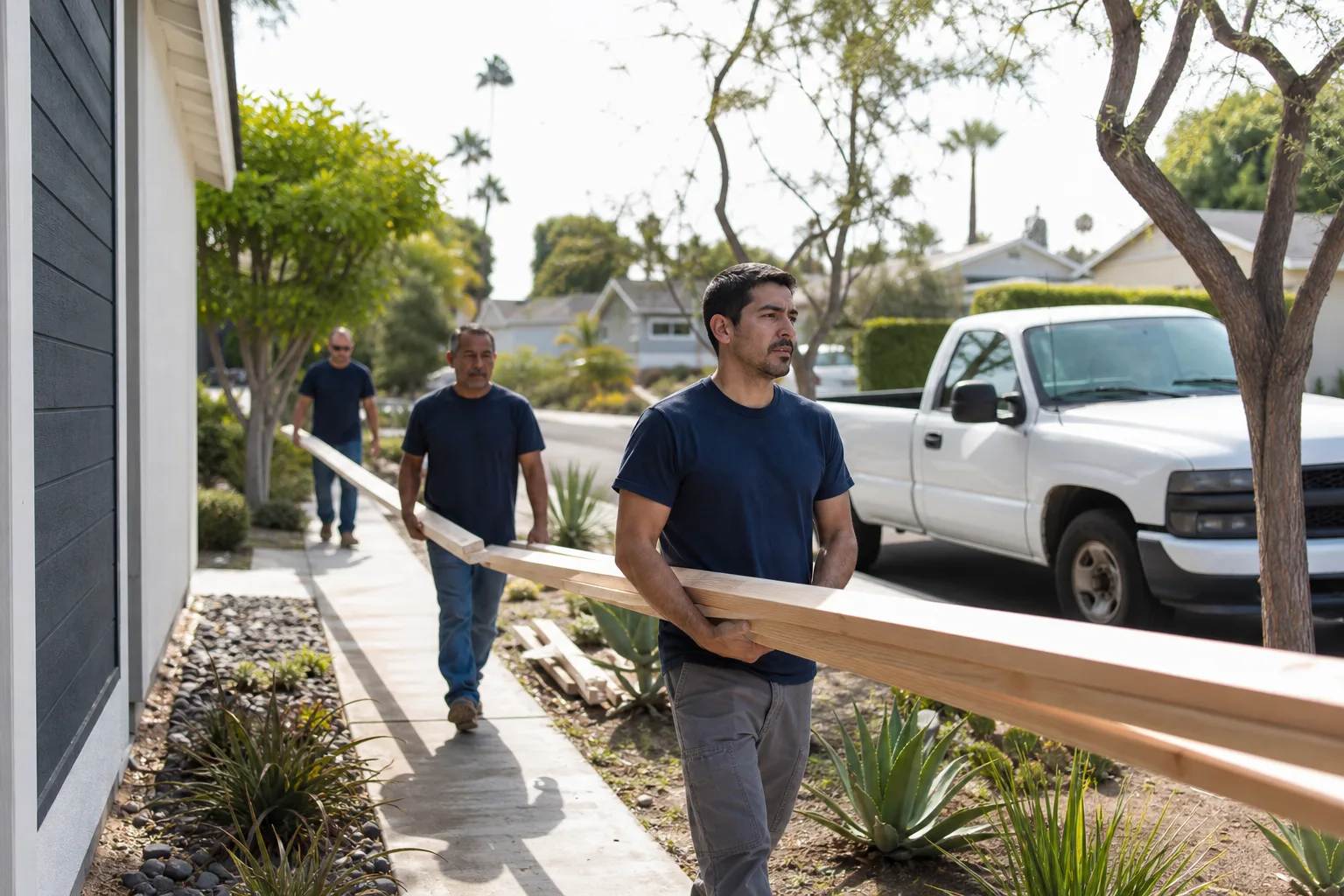
We stock the common items on the truck: Dvele-spec anchor bolts, form board materials, compaction testing equipment, and standard LADBS-approved sewer and conduit fittings, with specialty items ordered per project from our local Woodland Hills suppliers within a couple of days. You won’t wait a week for us to source a 4 inch sweep or an anchor template. Call (559) 249-3776 for an exact quote on your lot.
Start with a Site Walk in Woodland Hills
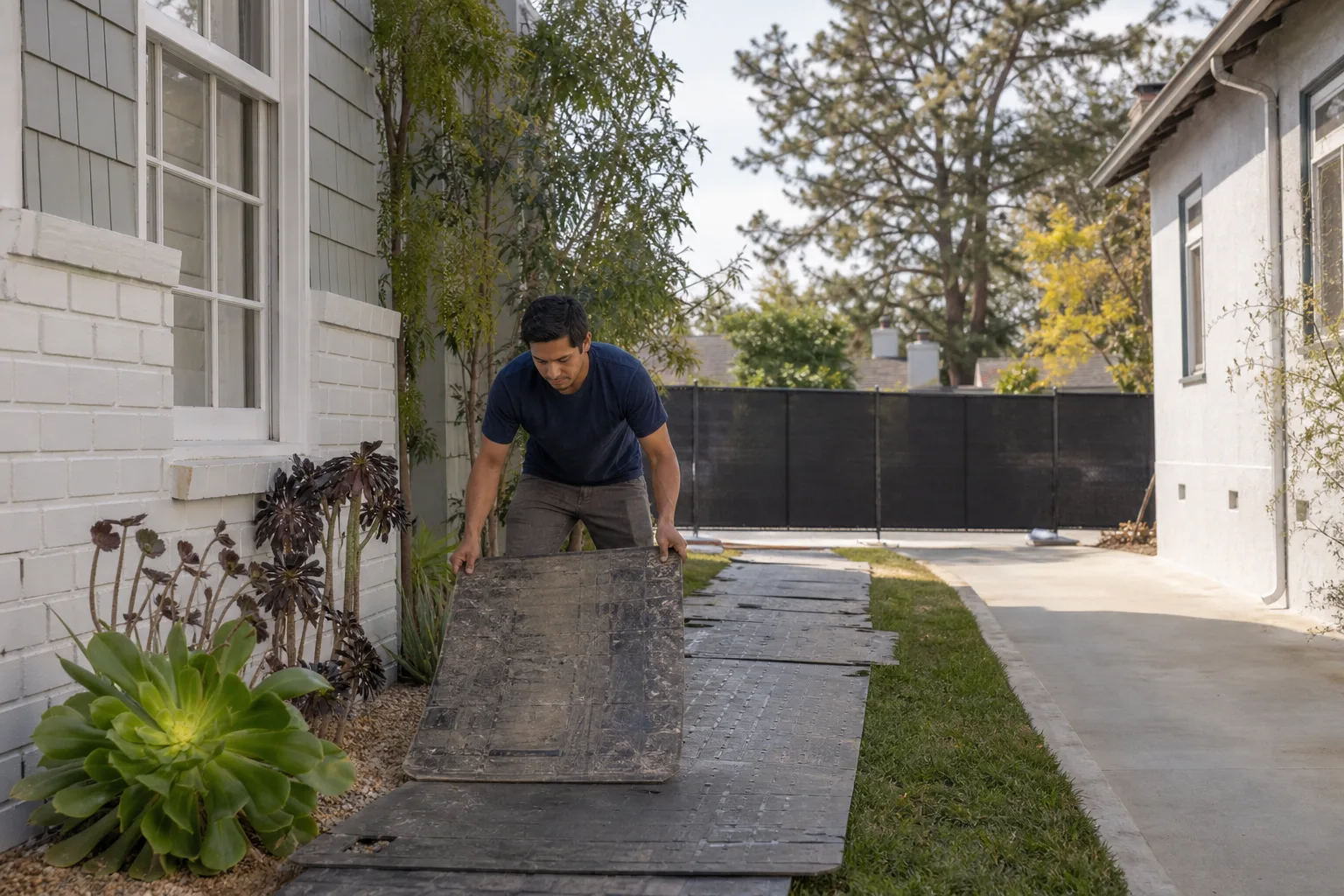
If you own a Dvele module and your site prep or utilities aren’t ready, or if you’re still in planning and want a builder who reads the Dvele drawings the same way you read a contract, twice, call Ben Ortega and the crew at Seedling ADU Woodland Hills. We’ll walk your lot, lay out the numbers in writing, and tell you what the first Tuesday morning will actually look like: background-checked crew in uniform, shoe covers and drop cloths where they’re needed, pet-safe materials wherever there’s a choice, and a photo of the clean-up before we leave. Tell me what you need the space to do, and we’ll figure out how to build that. Call (559) 249-3776 for a free estimate.
Written by Ben Ortega, Owner, Seedling ADU Woodland Hills at Seedling ADU Woodland Hills, serving Woodland Hills and nearby areas.