Tuff Shed Site Prep & Utilities: The Woodland Hills Owner’s Guide
Site prep and utility work for a Tuff Shed in Woodland Hills typically runs $2,800 to $9,500 installed, depending on whether we’re bringing power, water, and a proper foundation to a bare corner of the yard or finishing utility connections for a structure that will eventually be lived in. Most owners discover this work is needed the day the Tuff Shed gets delivered and the ground isn’t level, or the day they flip a switch and nothing happens. We handle the full sequence: grading, gravel or concrete pad, electrical trenching, subpanel work, water line stubs, and drainage so the shed doesn’t sit in a puddle every January.
Here’s the honest picture. A Tuff Shed is a well-built shell. What makes it useful as an office, studio, or guest space is what’s underneath it and what’s running to it. In Woodland Hills, the soil runs from hard clay to decomposed granite depending on whether you’re north of Ventura Boulevard or up toward the Santa Monica foothills, and that soil dictates how much prep is needed before the shed ever touches the ground. Ben Ortega and our crew have handled this enough times to tell you exactly what your lot will need in the first walkthrough, not after the shed is already sitting crooked.
Key Takeaways
- Site prep in Woodland Hills usually starts at $2,800 for grading and a gravel pad with basic drainage
- Full utility rough-in (electric panel feed, water stub, data line) adds $4,000 to $6,500 on average
- Tuff Shed requires a level pad within 1/2 inch over 10 feet for warranty coverage on the building
- We provide a written price before any work starts, and every job is covered by the 365-Day Done Right Promise
Which Tuff Shed Models This Applies To
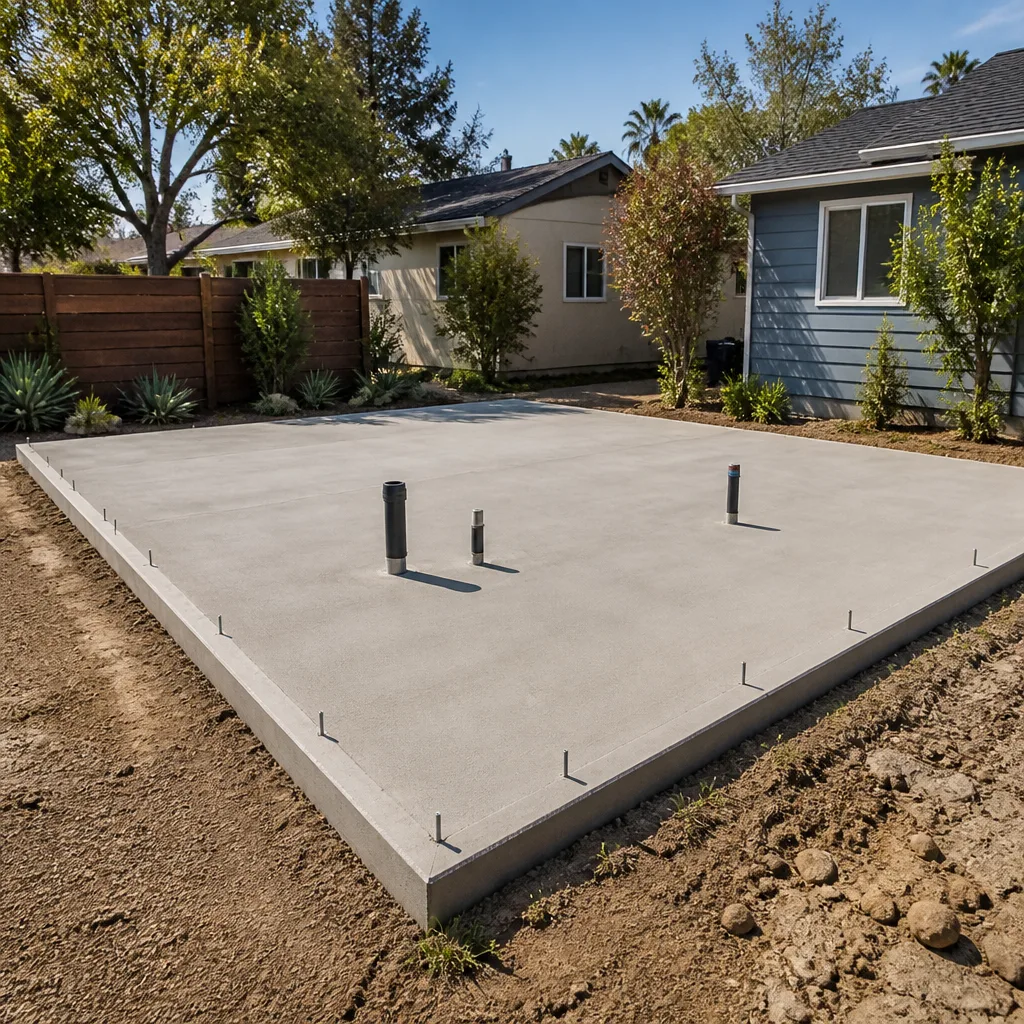
Site prep and utility work applies to every Tuff Shed model delivered to a Woodland Hills property, but the requirements change significantly by size and intended use. The Premier and Premier Pro series, the ones most owners choose for ADU conversion or home office use, are the models we see most often in this work. These are larger structures, typically 10×12 and up, which means the pad has to carry real weight and the utility runs have to meet California building code, not just “good enough for a garden shed.”
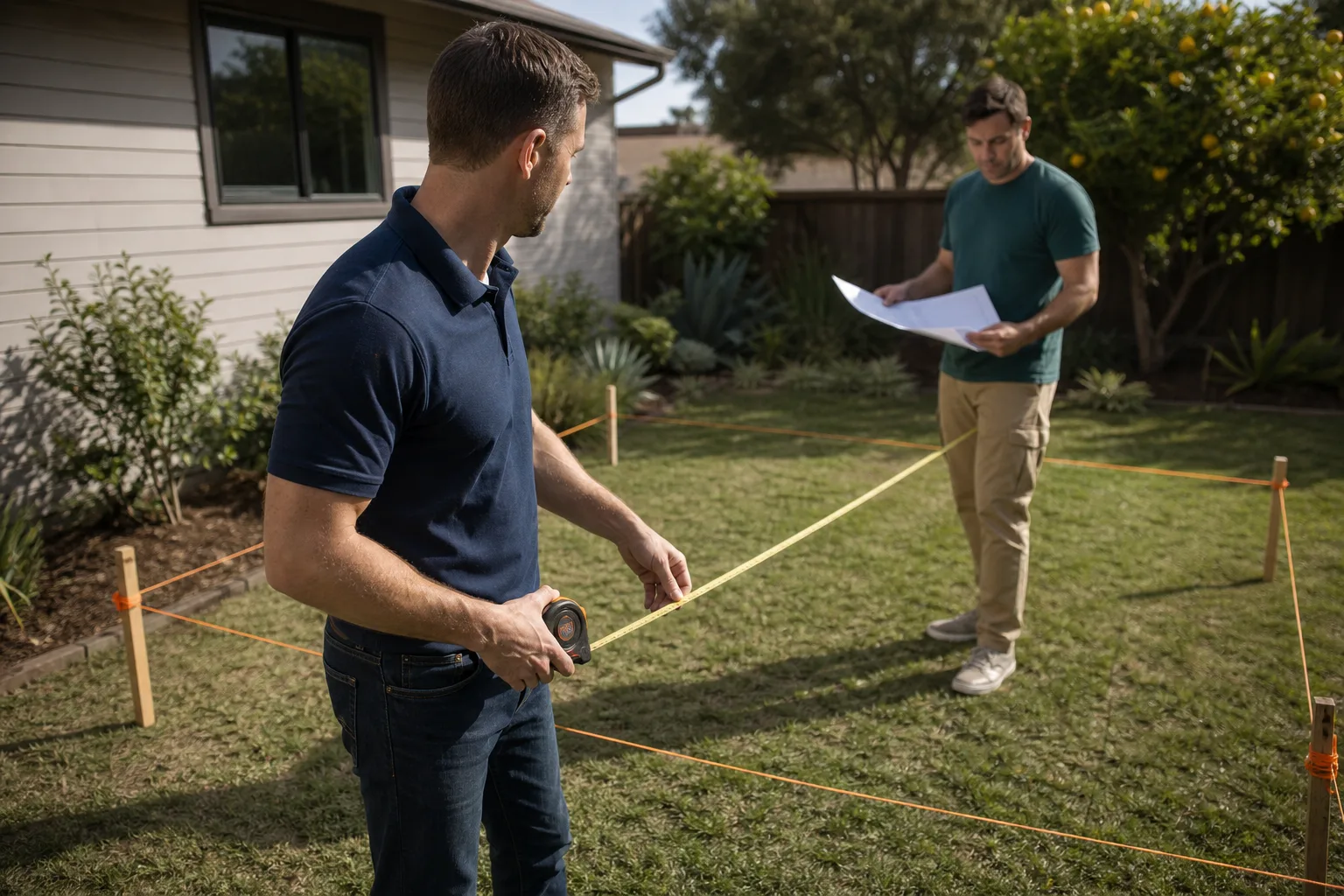
The compatibility gotcha most owners don’t know until the delivery day: Tuff Shed’s warranty requires the building to sit on a level surface with no more than a 1/2-inch variance over any 10-foot span. A sloped Woodland Hills backyard, common in the hills south of the 101, will not pass that test without grading or a raised foundation. We measure first, then build the pad to match. On the utilities side, we stock parts and equipment for both standard 120V electrical feeds for storage and workshop use, and full 240V subpanel feeds when the shed will eventually hold a mini-split, water heater, or kitchenette. We also work with Abodu, Cover, and Dvele when owners decide a prefab ADU makes more sense than converting a Tuff Shed, so you get honest input on which path fits your lot and budget.
We’re an independent service provider, not affiliated with Tuff Shed, which means we can recommend the right solution for your property without pushing one brand’s accessory lineup.
Signs Your Tuff Shed Site Prep & Utilities Is Failing
- The shed door starts sticking or dragging. This is almost always a settling pad. In Woodland Hills, the clay soil expands and contracts with winter rains and summer heat, and without proper compaction and drainage, a corner of the shed will sink enough to throw the door frame out of square.
- Water pools around the base after rain. Inadequate drainage or an undersized gravel bed. The water that sits against the floor system will eventually wick up into the sill plates and soften the floor joists, especially on the downhill side of a sloped lot.
- Outlets trip the breaker constantly. A utility feed that wasn’t sized for the shed’s actual load, or worse, an extension cord run from the house panel. Real trenching and a proper subpanel fix this, and they have to be done to code in Los Angeles County.
- The shed floor feels soft or spongy in spots. Moisture has been getting under the structure. That means the vapor barrier or drainage was skipped, and the floor system is quietly rotting from below.
- The building is visibly out of level when you set a ball on the floor. The pad has settled unevenly, and the shed is now twisting. Left alone, this will pull siding seams apart and void the Tuff Shed warranty.
Replacement Cost & What’s Included
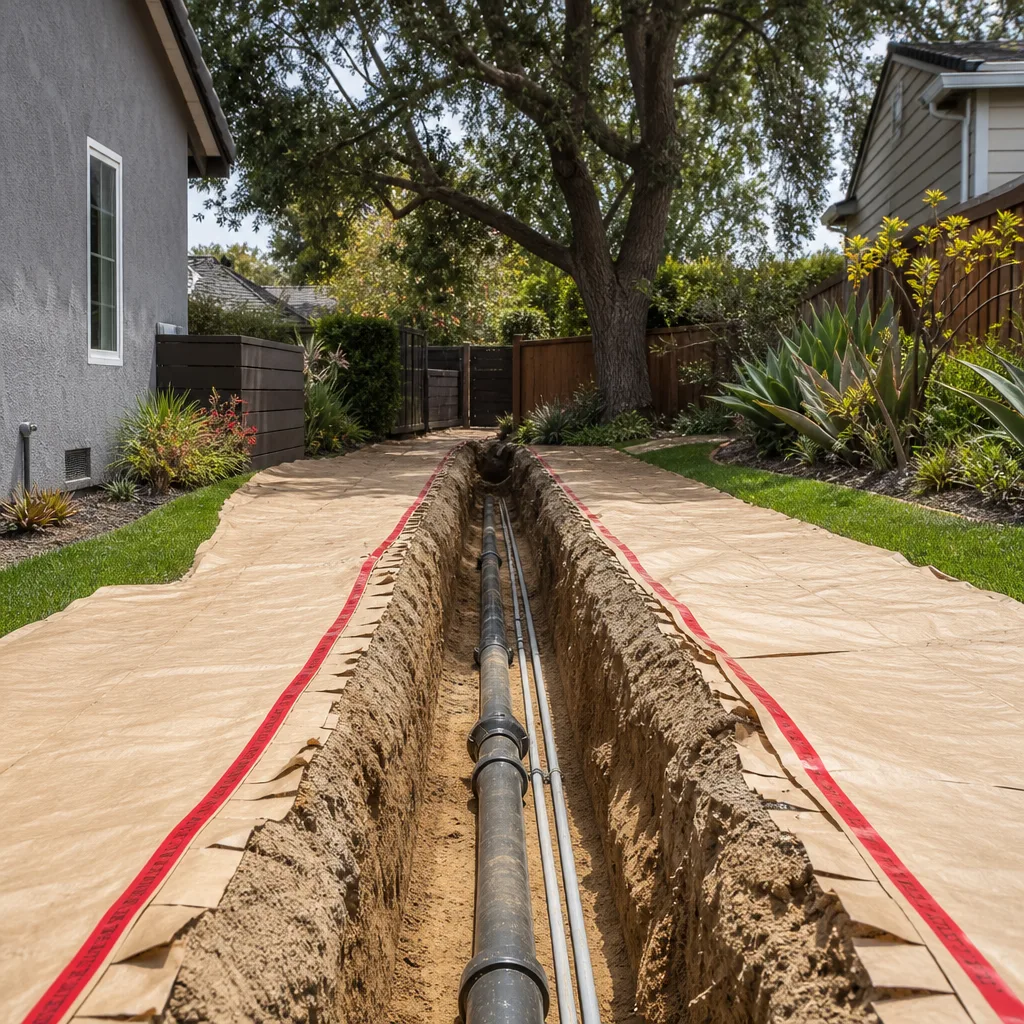
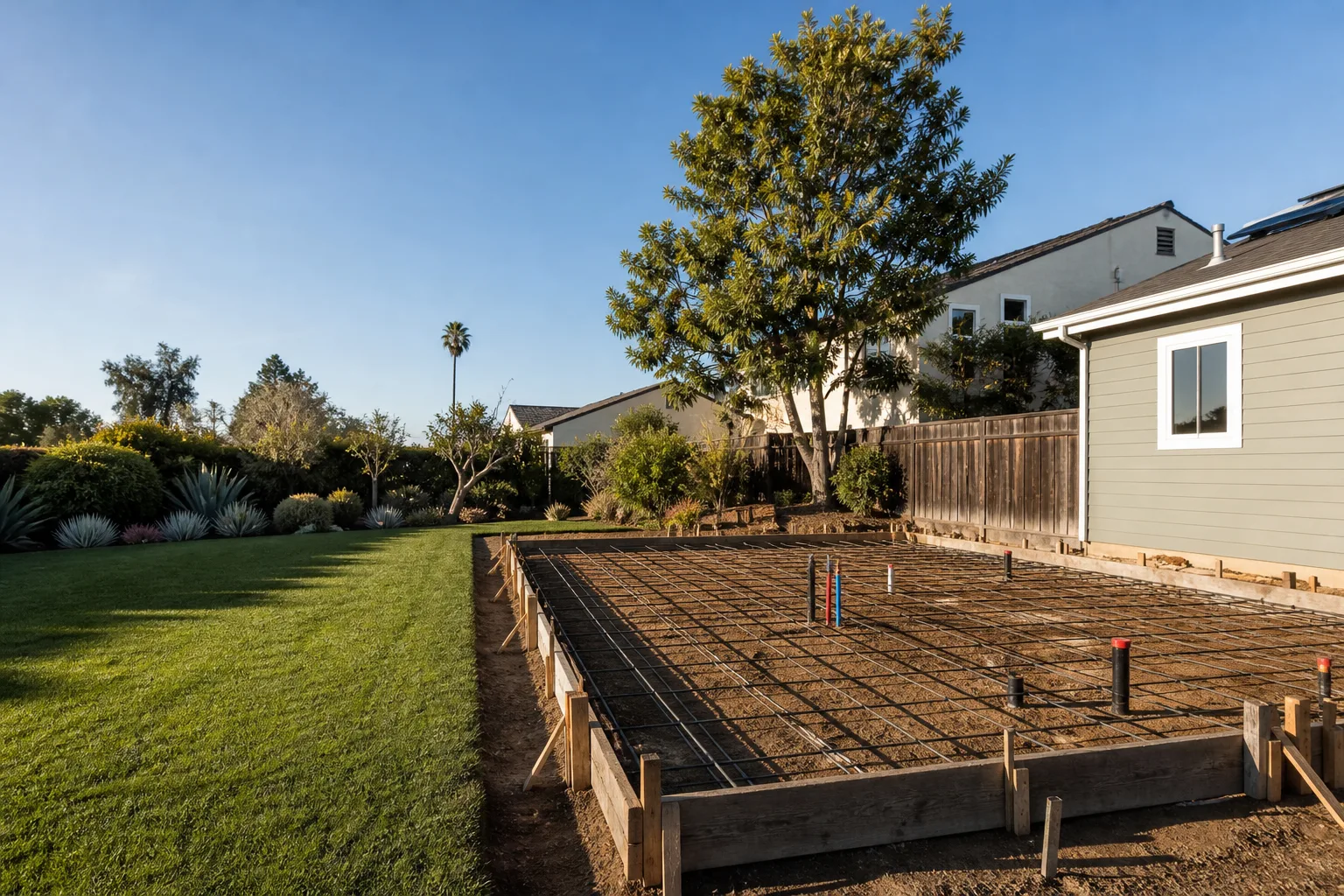
For a Tuff Shed site prep job in Woodland Hills, plan on $2,800 to $4,200 for grading, soil compaction, a compacted gravel base with drainage, and setting blocks or a small concrete pad for sheds up to 10×14. Larger Premier models or any structure headed for living space run $4,500 to $7,000 for a full concrete pad with rebar, anchor bolts, and a vapor barrier. Utility work is billed separately and honestly: $2,200 to $3,800 for a standard 120V electrical feed with trenching, conduit, a small subpanel, and outlets, or $4,500 to $6,500 when you’re adding a 240V panel, water line stub, and data run. Every price is written down before work starts, with no surprise line items added after the crew shows up.
The variables that move the price are trenching distance from the house, soil conditions on your specific lot, and whether Los Angeles County requires a soils report or engineered pad. We’ll tell you which applies to your property during the free estimate, and the number we give you is the number you’ll pay. The workmanship on every site prep and utility job is covered by our 365-Day Done Right Promise: if it’s not done right, we make it right.
DIY or Call Us?
You can safely check the pad yourself: put a 4-foot level on the shed floor at three or four points, check that downspouts and runoff are moving water away from the base, and look at the outdoor outlet for any scorch marks or melted plastic. Those are the things that tell you whether you have a real problem and how urgent it is. What we’d ask you not to do yourself is the electrical work. Running a buried line from your main panel to a shed in Los Angeles County requires a permit and inspection, and a code-compliant installation protects your family and your property. Improperly sized wire buried in the wrong conduit can arc underground and start a fire you won’t see until it’s too late. We run this work with licensed electricians, pull the permits, and pass the inspections before we call the job done.
If you’d rather spend your weekend doing something besides moving dirt and pulling wire, call us at (559) 249-3776. We’ll bring the right equipment and the right crew, and we’ll leave your yard better than we found it.
FAQs
A standard grading and gravel pad job takes 2 to 3 days including inspection and compaction. A full concrete pad with utility rough-in takes 5 to 8 working days, with inspection scheduling generally being the longest variable. Call (559) 249-3776 and we’ll give you a realistic timeline for your specific lot.
Sometimes, yes. If one corner has settled, we can often lift and re-level using slab jacking or add compacted fill and drainage without a full teardown. The answer depends on how far the settling has gone and whether the base was properly compacted originally, and we’ll tell you honestly which route makes sense after inspecting the pad.
We bring everything: the gravel, concrete, conduit, wire, panels, outlets, and the equipment to trench and compact. You never need to run to a supply yard. When we give you the written price, parts and materials are already included.
No. The written price you receive before any work begins is the price you pay, unless we uncover something no one could have anticipated and you approve any change in writing first. That’s the Seedling ADU Woodland Hills way, and it’s the only way we work.
Written by Ben Ortega, Owner, Seedling ADU Woodland Hills at Seedling ADU Woodland Hills, serving Woodland Hills and nearby areas.