Mighty Buildings Site Prep & Utilities: The Woodland Hills Owner’s Guide
Site prep and utility work for a Mighty Buildings ADU in Woodland Hills typically runs $18,000 to $42,000 installed, depending on trenching distance, panel upgrades, and whether your lot has a slope or clay-heavy soil that complicates foundation work. We keep crews and equipment staged locally, so we can typically start site prep within 2 to 3 weeks of your permit being issued. Most owners discover their site prep is failing or inadequate when they notice standing water near the pad, uneven settlement under the unit, or a utility stub that does not match what the Mighty Buildings factory panel drawing calls for.
Before we go further, you should know this: Seedling ADU Woodland Hills is an independent general contractor. We are not affiliated with Mighty Buildings, and we are not a factory-authorized parts dealer. What we are is a Woodland Hills crew that has prepped sites for Mighty Buildings units and understands what those panels need from the ground up, literally. If your pad is settling or your utilities were stubbed wrong by a previous contractor, this page will walk you through what actually needs to happen and what it will cost.
Key Takeaways
- Installed site prep and utility work for Mighty Buildings units in Woodland Hills runs $18,000 to $42,000 depending on soil, trenching, and panel needs.
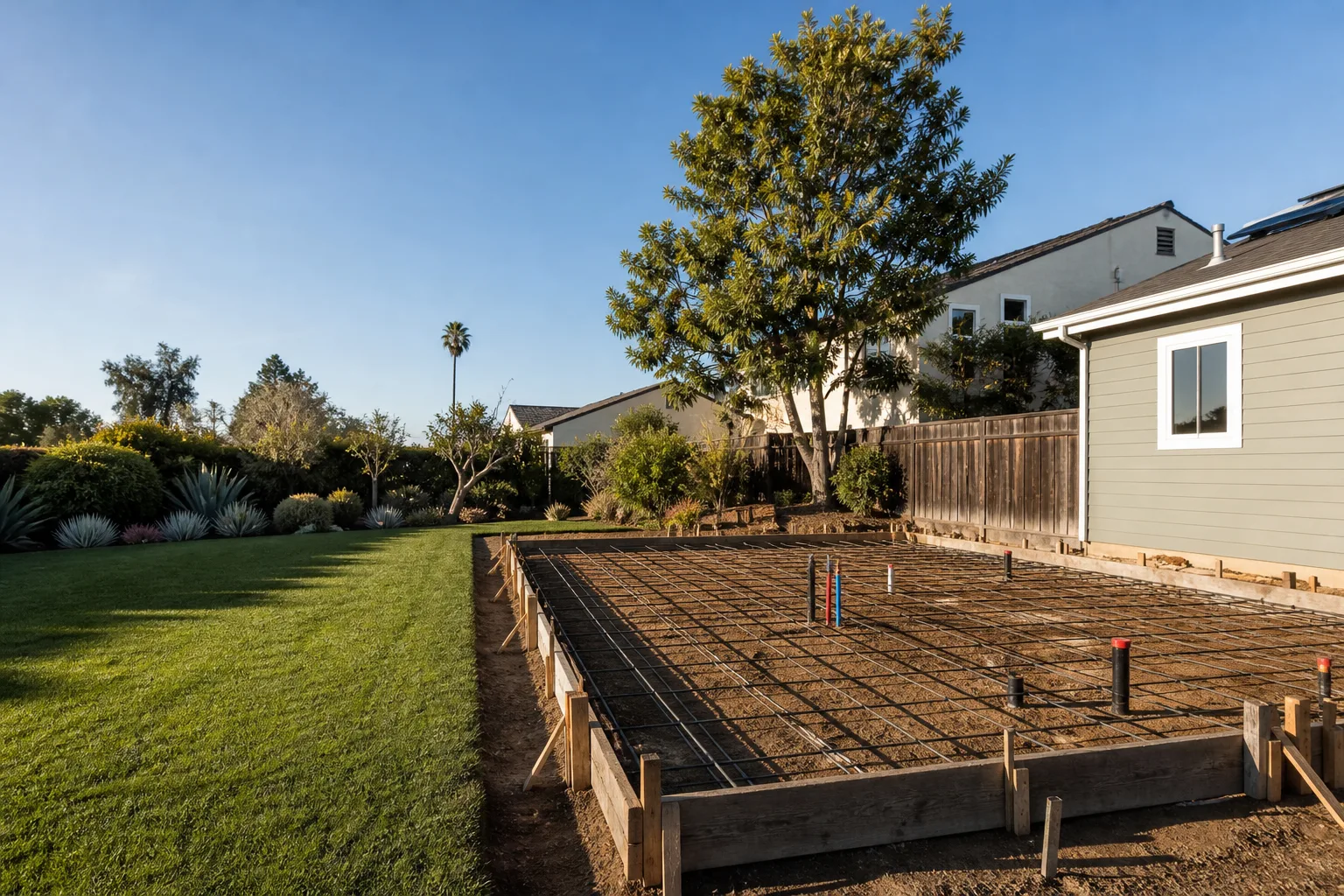
- Mighty Buildings panels are unforgiving about pad flatness, your foundation tolerance is tighter than a stick-built ADU: within 1/4 inch over 10 feet.
- Woodland Hills clay soil expands and contracts seasonally, which is the most common cause of pad settlement we see near Warner Center and south of Ventura Boulevard.
- We stock trenching equipment, conduit, panels, and utility line materials locally, and we can usually mobilize within 2 to 3 weeks of permit issuance.
Which Mighty Buildings Models This Applies To
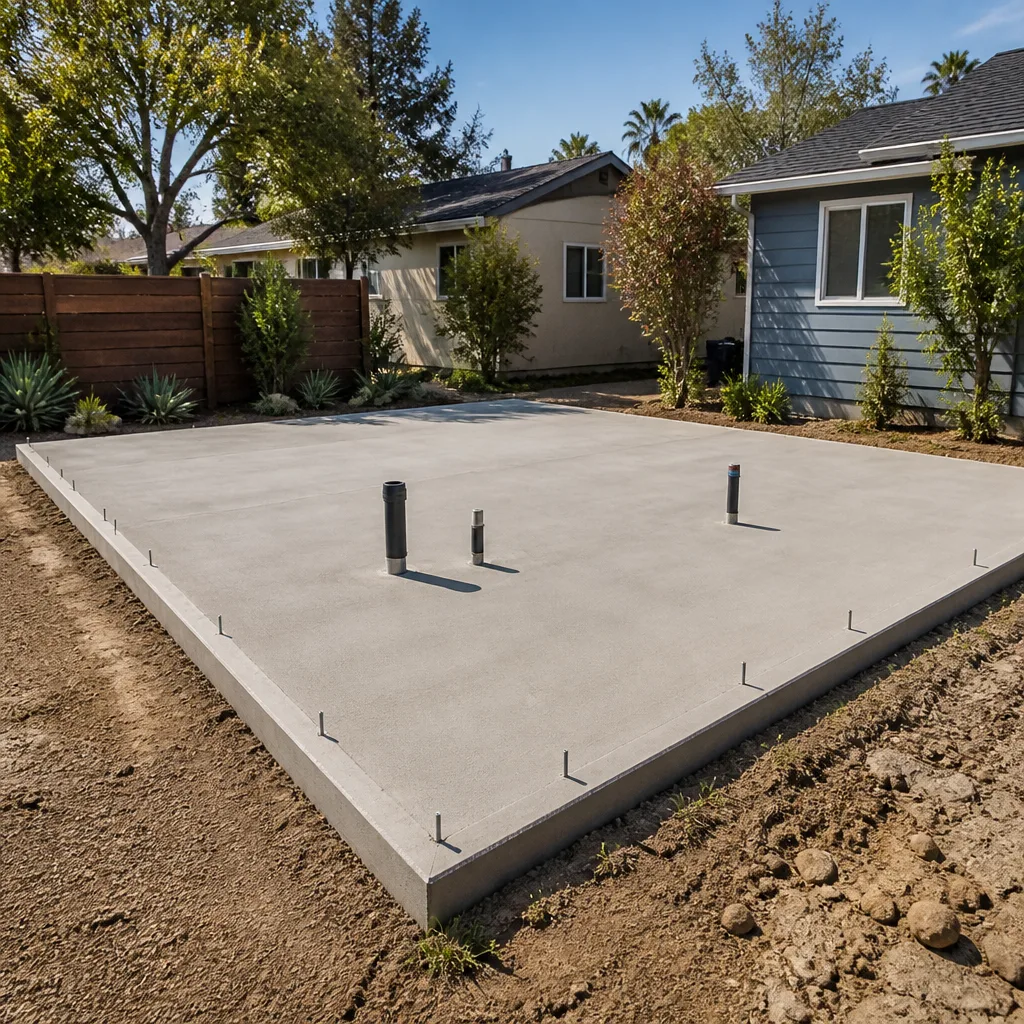
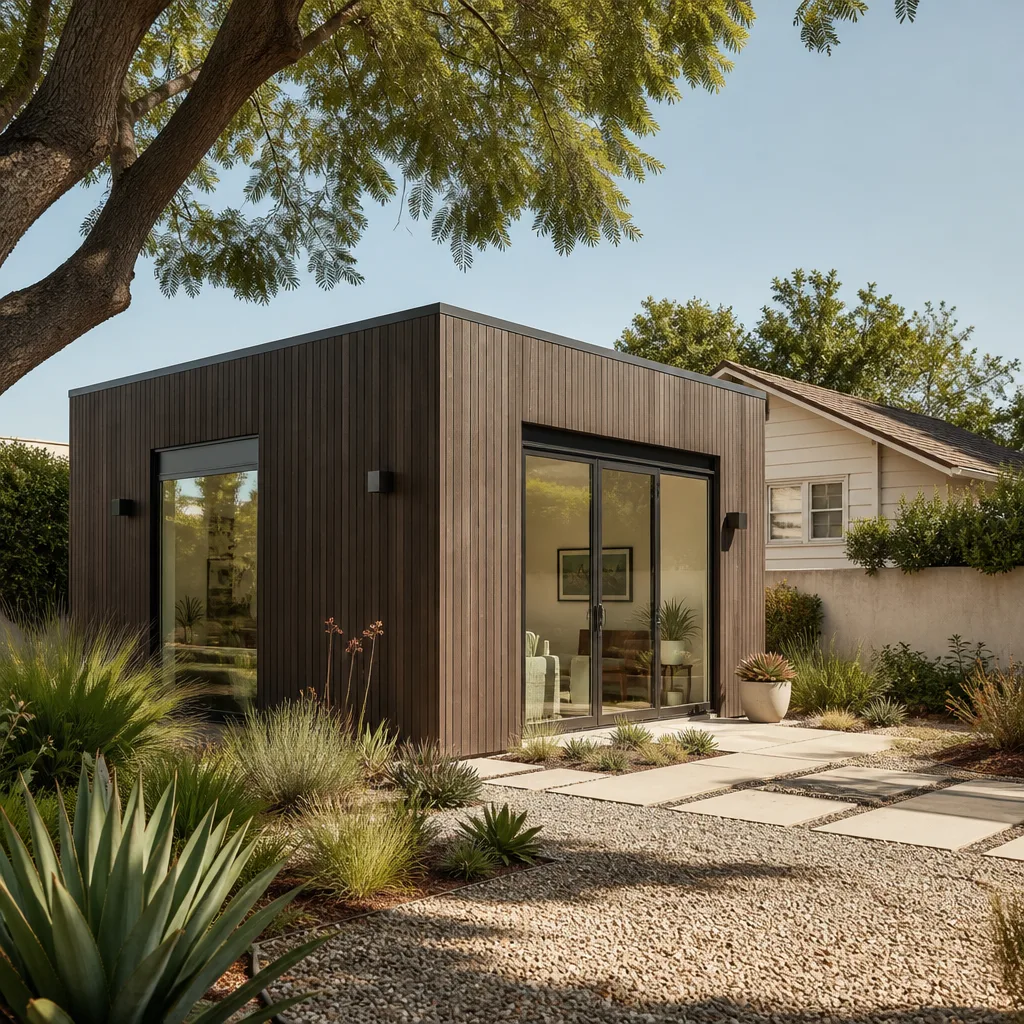
Mighty Buildings offers several panelized and modular ADU lines, and the site prep requirements differ meaningfully between them. The Mighty House series, which includes Studio, One Bedroom, and Two Bedroom configs, uses factory-fabricated composite panels that bolt to a foundation system. The Mighty Duo and larger multi-module layouts add a marriage line where two factory modules meet, and that seam is where we see pad tolerance failures cause visible cracking in the joint when the site work was done sloppily.
Here’s the compatibility gotcha we run into regularly: Mighty Buildings ships a foundation and utility plan set specific to your unit’s serial number. If a previous contractor stubbed electrical or plumbing based on a generic ADU spec, the live connections will not land where the factory panels need them. We’ve seen a Woodland Hills homeowner pay a plumber to move a stub 14 inches because the original site prep used a Cover ADU template instead of the Mighty Buildings drawing. The fix is simple: check the metal rating plate on the panel near your unit’s entry for the serial number, then verify your utility stub locations against the factory foundation plan before you sign off on any repair scope. OEM drawings are the standard here; aftermarket is for conduit and wire, not for geometry.
Signs Your Mighty Buildings Site Prep & Utilities Is Failing
- Water ponding near the foundation pad after rain. Woodland Hills gets short, intense winter storms, and if your drainage swale is undersized or clogged, water sits against the pad edge. Over time that water works into the subgrade and softens the clay, which is how settlement starts.
- Doors inside the unit begin to stick or bind. A Mighty Buildings panel is a rigid composite. When the pad settles unevenly, the panels rack slightly, and the first place you notice it is a door that no longer closes cleanly. That’s not a hinge problem, that’s a foundation problem.
- Visible cracking in the marriage line on a Duo or multi-module unit. If the two factory modules are bearing on a pad that is out of level by more than the factory tolerance, the seam will open up. This is a site prep failure, not a factory defect.
- Electrical flicker or breakers tripping when the heat pump cycles. Mighty Buildings units are all-electric and pull a serious inrush load when the HVAC and water heater run at the same time. If your site prep undersized the feeder or the panel is a 100-amp when the drawings call for 125 or 200, you’ll see it here first.
- Water pressure drops when two fixtures run simultaneously. If the utility stub used the wrong line size or a previous crew kinked a PEX run under the slab, you’ll get flow loss before you get a leak. It’s a small symptom that usually points to a sloppy underground install.
Replacement Cost & What’s Included
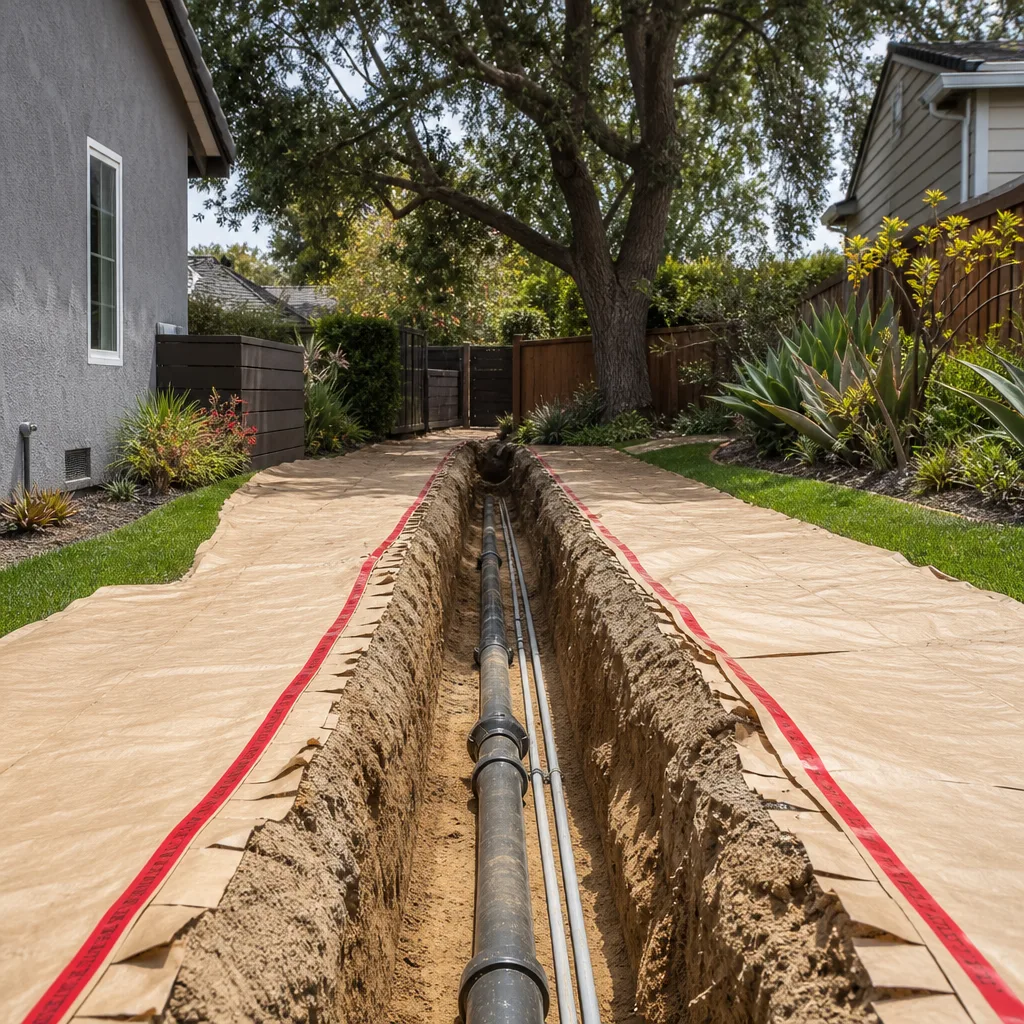
Let me give you real numbers, the kind I write on a proposal before we ever put a shovel in the ground. For a Mighty Buildings site prep correction or full utility replacement in Woodland Hills, plan on the following installed ranges:
- Pad re-leveling and subgrade repair: $4,500 to $9,000, depending on access and how much material we have to remove and recompact.
- Electrical service upgrade to 125 or 200 amps: $6,000 to $9,500, including panel, feeder, trenching, and LADWP coordination if the service drop needs to move.
- Water and sewer utility stubbing or repair: $3,200 to $6,800, depending on distance from the main and soil conditions near Ventura Boulevard’s older infrastructure.
- Drainage correction and swale work: $2,500 to $5,400, which is the most common single item we fix on existing Mighty Buildings pads in Woodland Hills.
Every quote includes the written price before anything starts, so you will know exactly what Tuesday looks like. No change orders because we hit rock. No surprise line item for trenching that turned out longer than expected, we price the job from the drawings and the walk, not from a guess. And all our site prep work carries the 365-Day Done Right Promise: if the pad settles again or a utility fails inside the first year, we make it right on our dime.
DIY or Call Us?
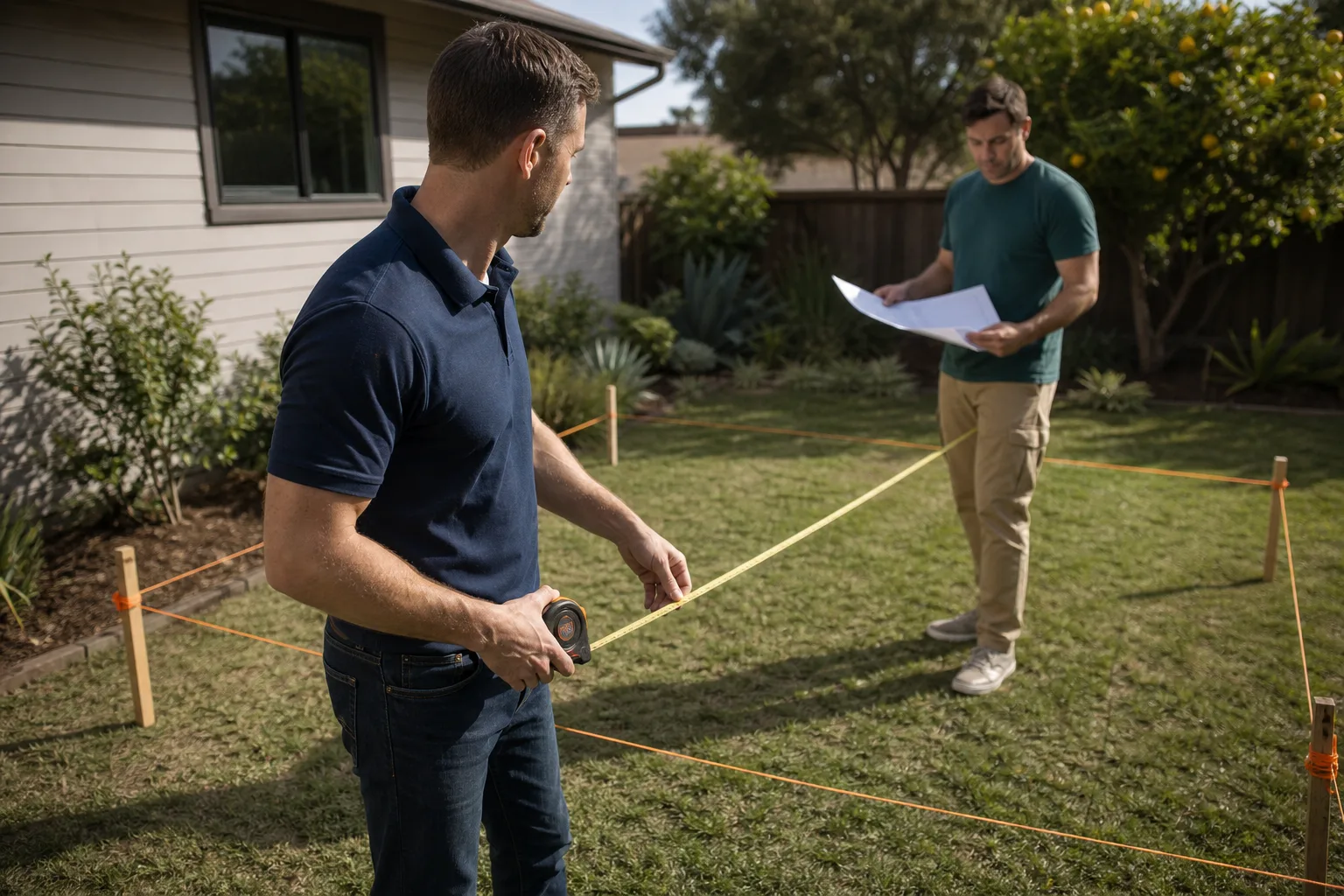
Some of this work a careful homeowner can assess. You can check your electrical panel rating by reading the main breaker. You can look at the foundation drawing and measure whether your utility stubs land where the factory plan says they should. You can watch where water pools after a rain. None of those checks will put you in danger.
But trenching, subgrade compaction, and bringing a 200-amp service to an all-electric ADU are not weekend projects. The danger here is not a spring that takes your finger off, it is an underground electrical line that was buried too shallow, a gas line you did not know was there, or a subgrade that was not compacted to 95% before the pad was poured. One of those mistakes will cost more than the ADU itself. If you want to know what your repair will cost, call us at (559) 249-3776 and we’ll walk the lot with you. Ben Ortega grew up in Los Angeles and studied construction technology at LATTC, and he still reads the California Residential Code before bed. You’ll get a straight answer.
FAQs
Properly compacted, properly drained site work in Woodland Hills should outlast the ADU itself; the failure we see is almost always drainage, not the concrete or the conduit. Clay soil here holds water through the winter and shrinks hard in summer, so a pad with no swale or an undersized drain will settle within 3 to 5 years. Fix the water first, and the ground stays put. If you’re seeing signs of settlement, call us at (559) 249-3776 for a walk and an honest number.
Most Woodland Hills site prep failures can be repaired without demolishing the existing pad; we do slab jacking, subgrade injection, and swale correction far more often than full pad replacement. Full replacement is only the right call when the subgrade was never compacted and the pad is cracked through in multiple planes. Bring us the symptoms and the drawing set, and we’ll tell you which path you’re on without charging you for a sales pitch.
A drainage fix usually takes 2 to 3 days on site. A utility re-stub takes 3 to 5 days including trenching and inspection. A pad re-level or full subgrade repair is a 1 to 2 week job. The lead time in Woodland Hills is usually the permit and LADWP coordination, not the work itself. Call (559) 249-3776 and we’ll give you a written schedule before we ever put a shovel in the ground.
We stock the common materials locally: conduit, LADWP-approved panels, PEX and copper supply line, drain tile, and the geotextile and base rock we use on every Woodland Hills pad. What we do not stock is the Mighty Buildings foundation drawing set; that comes from your unit’s serial number and the factory plan. So your job does not wait on materials, call (559) 249-3776 and Ben will walk you through exactly what we have and what we order before we start.
Schedule Your Free Site Prep Assessment
If you own a Mighty Buildings unit in Woodland Hills and the pad is settling, the drainage is failing, or the utilities were never stubbed right, you already know the problem will not quiet down on its own. Seedling ADU Woodland Hills will walk your lot, check your stubs against the factory drawing, and hand you a written price before any work begins. We will also tell you whether we think a repair is even necessary; sometimes the answer is no, and you deserve someone who says that out loud. We work with Abodu, Cover, and Dvele units too, so if your project crosses brands, we can still help.
Tell me what you need the space to do, and we’ll figure out how to build that. Call (559) 249-3776 to schedule your free estimate. Our crew is background-checked and uniformed, we put shoe covers and drop cloths down inside your home, and we send a photo of the clean-up before we leave for the day. That’s the Cedarwell Care Promise, and it applies to every site we touch.
Written by Ben Ortega, Owner, Seedling ADU Woodland Hills at Seedling ADU Woodland Hills, serving Woodland Hills and nearby areas.