Plant Prefab Site Prep & Utilities: The Woodland Hills Owner’s Guide
Plant Prefab site prep and utility connection work in Woodland Hills typically runs $12,000 to $38,000 installed, depending on your lot’s slope, soil condition, and how far trenching has to reach from the street or main panel. We stock the utility stubs, conduit, water-line fittings, and sewer laterals needed for Plant Prefab deliveries, and our crew handles everything from foundation grading to final utility sign-off. Most owners realize site prep got shortchanged the day the panel plant confirms delivery and the transporter asks whether the pad tolerances and utility stubs are actually ready.
What usually happens is this: the foundation was poured, but nobody thought through the two inches of fall on the sewer line, or the panel doesn’t sit square because the pad has a 1.5-inch deviation that nobody caught. In Woodland Hills we see this a lot on lots along the hillsides above Ventura Boulevard, where even a small grade change messes with trench depth and makes the utility rough-in more involved than the line-item on a generic estimate suggests.
Key Takeaways
- Site prep and utility connection for a Plant Prefab unit in Woodland Hills typically lands between $12,000 and $38,000, with the spread driven by soil, slope, and distance to the main connection points.
- Utility stubs must be within one inch of the elevations on Plant Prefab’s approved foundation drawings, or the delivery gets pushed while fixes happen on-site.
- Soil compaction in Woodland Hills matters more than most homeowners expect, especially in areas with clay-heavy ground that shifts between wet winters and dry summers.
- Every job comes with a written price before work starts and the 365-Day Done Right Promise after it’s finished.
Which Plant Prefab Models This Applies To
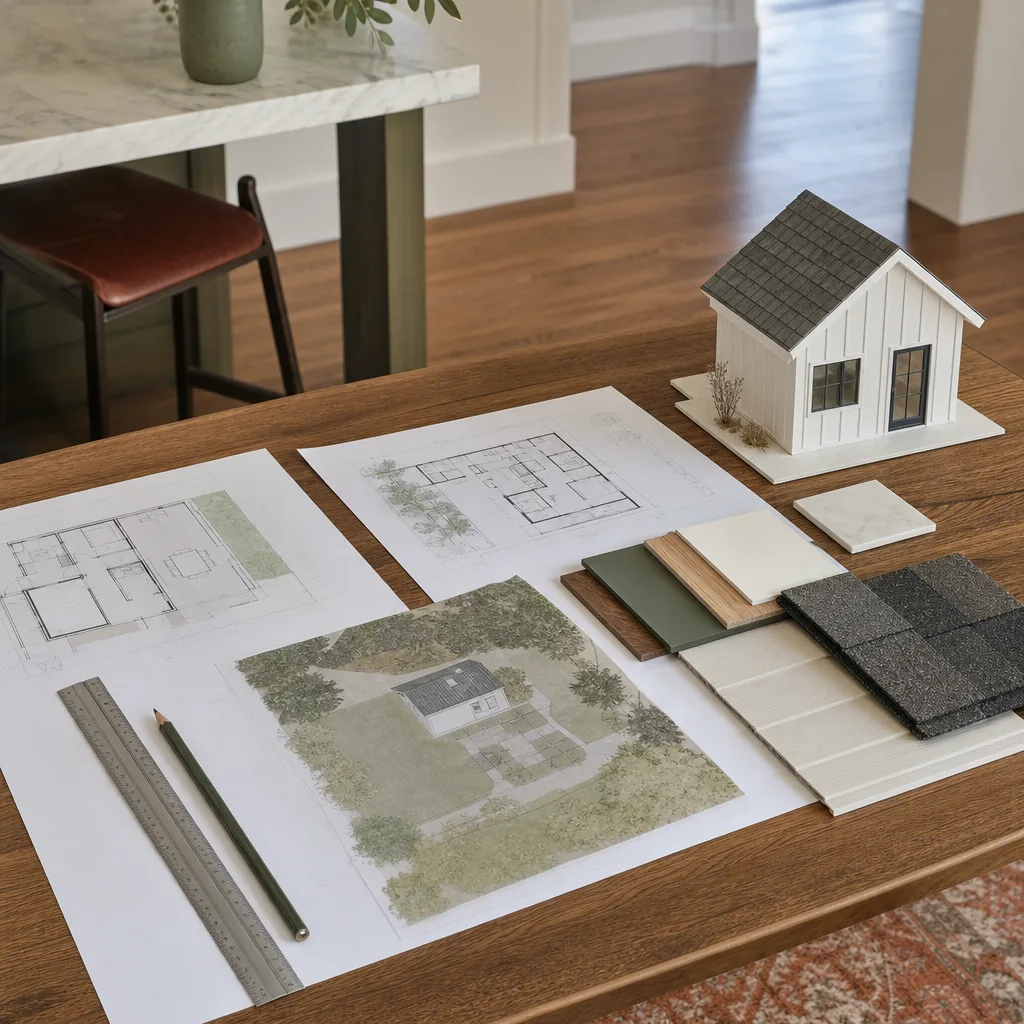
Site prep and utility rough-in work applies to every Plant Prefab panelized and modular line we install, but the details shift by series. The smaller accessory dwelling units typically require a simple pier or slab-on-grade foundation with a 2-inch utility stub allowance, while the larger two-story LivingHome configurations need full perimeter foundations with cast-in anchor bolts positioned to match factory tolerances. We match utility stub locations to the specific elevation drawings Plant Prefab provides, not to a generic site plan, because a stub that’s off by even a few inches means cutting concrete later.
When we do a site walk in Woodland Hills, one of the first things Ben Ortega checks is whether the original utility plan accounted for the actual slope on the property. He grew up in Los Angeles and worked near Warner Center, so he knows how lots that look flat from the street can drop two or three feet by the time you reach the buildable area. That changes how deep the sewer lateral runs and whether we’re trenching by hand in tight spots or bringing in equipment. For Plant Prefab specifically, the foundation spec sheet lists exact anchor bolt positions, panel set-down points, and utility stub callouts. OEM documentation is the controlling document here, and we work directly from it.
We’re an independent contractor, not affiliated with Plant Prefab, which means we can also stock compatible aftermarket components where the specification matches. For utility stubs and conduit, brand name doesn’t change the function. What matters is the inside diameter, material rating, and elevation. For certain things like the plumbing transitions and electrical disconnects, we recommend OEM-spec parts because warranty and inspection pass-through is simpler.
Signs Your Plant Prefab Site Prep & Utilities Is Failing
- You run a string line across the pad and see a low spot or a crown – this usually means the base wasn’t compacted evenly, or the concrete settled after a rainy season. Left uncorrected, the panel set-down points won’t match the factory drawings, and the unit can stress at the connections.
- Water ponds near the foundation instead of draining away – in Woodland Hills, this shows up most often on clay soil after winter rains. It means the grading wasn’t sloped adequately, and water is now working against the slab edge and possibly the utility penetrations.
- Your sewer stub is lower or higher than the line coming out of the unit – waste lines need consistent fall, and a stub that’s off by more than a half-inch over a short run will eventually cause blockages. This is the kind of problem that doesn’t show up on a casual walkthrough, but it will show up in the first six months of use.
- The electrical conduit stubs out in the wrong place or at the wrong height – when the panel arrives and the main feeder won’t reach, the fix involves cutting and extending conduit, which adds cost and inspection delays.
- The water line stub is shallow or uninsulated – shallow lines are more susceptible to root intrusion and temperature swings. In Woodland Hills, where lots on the hillsides can drop below freezing a handful of nights each year, shallow lines also risk cracking at exposed fittings.
Replacement Cost & What’s Included
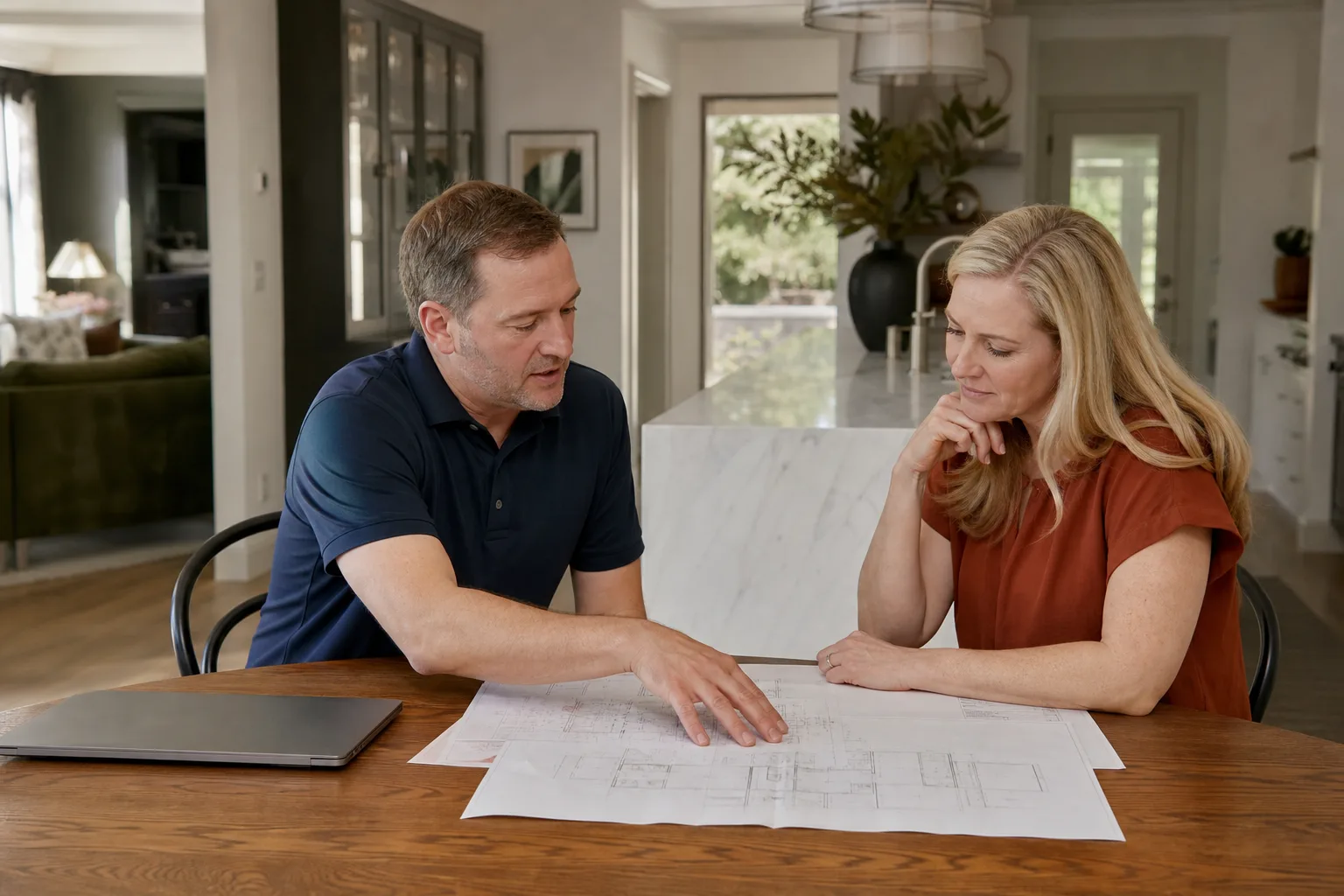
For a full site prep and utility package in Woodland Hills, you’re looking at $12,000 to $38,000. The low end covers a relatively flat lot with easy trenching, decent soil, and utility connections close to the street. The high end covers hillside lots that require retaining work, deeper trenching, longer sewer runs, upgraded panels, and sometimes engineered fill or soil replacement. We don’t pad these numbers. We write them down before any tool gets picked up, and the written price is the price.
What’s included in a typical package: site clearing and demolition of anything in the build area, pad grading and compaction, formwork and concrete or pier placement, rough trenching for water, sewer, and electrical, conduit and utility stub installation, and coordination with the city for inspections. If we’re correcting a failed prep job, we’ll isolate what’s wrong and fix only that, with a line-item price for each item. Every job is backed by our 365-Day Done Right Promise. If something isn’t done right, we make it right.
DIY or Call Us?
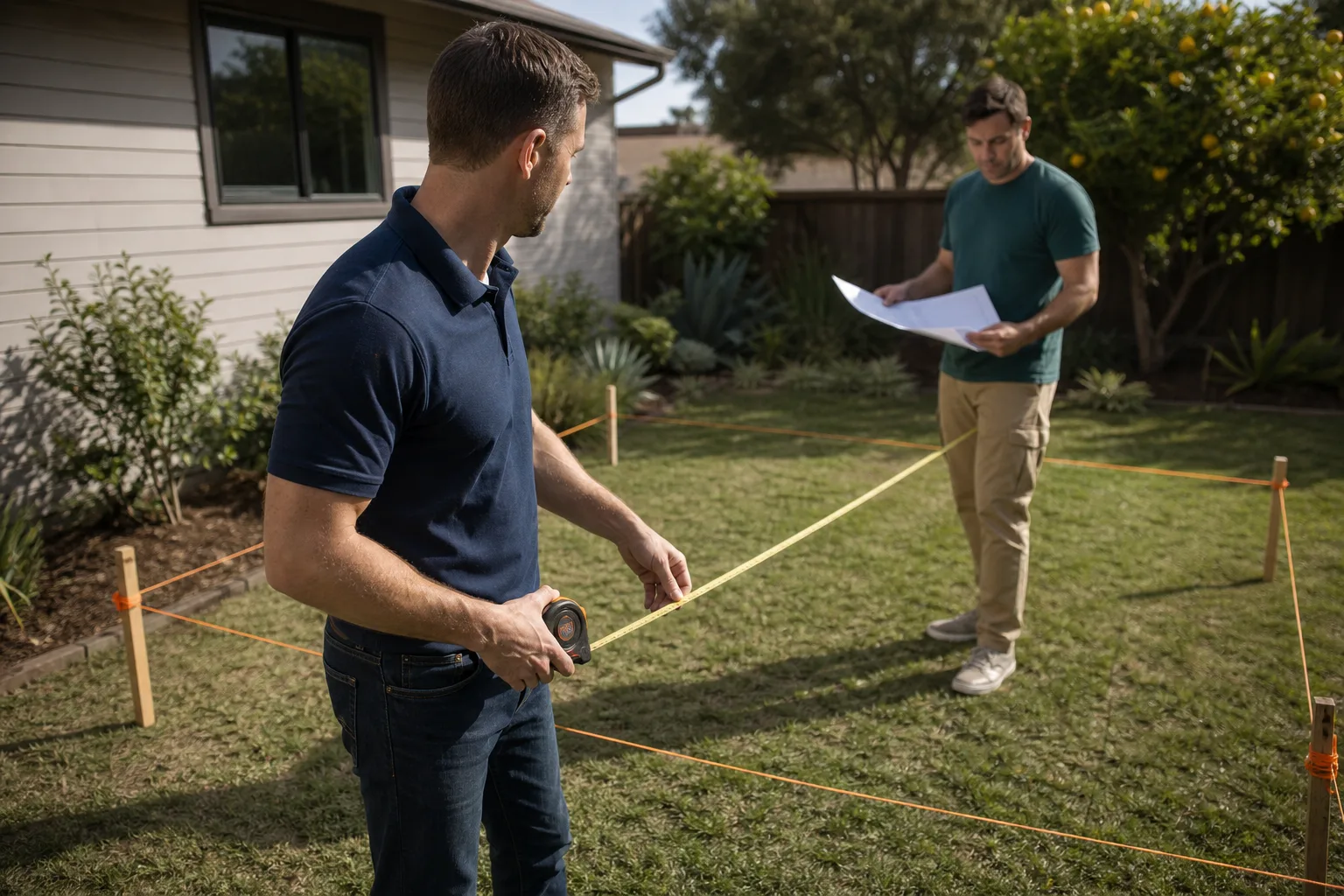
There are legitimate things you can check yourself without any special training. Run a string line across your pad and look for gaps. Look at where the stubs come out and compare them to the elevations on your foundation drawing. Walk the drainage path after rain and watch where water goes. Those are honest, useful inspections that cost you nothing.
What you shouldn’t do is cut into a concrete pad, re-route a sewer line, or touch electrical conduit. Those involve high-tension risks, buried-line hazards, and code requirements that exist for good reason. We’ve watched homeowners dig into what they thought was a shallow water line and find an energized conduit two inches away. In Woodland Hills, the underground utility marking service will locate public lines for free, but private lines on your lot are on you, and if you hit one the repair is yours too. If any of this feels outside your wheelhouse, call us at (559) 249-3776 and we’ll come take a look. Estimates are free.
FAQs
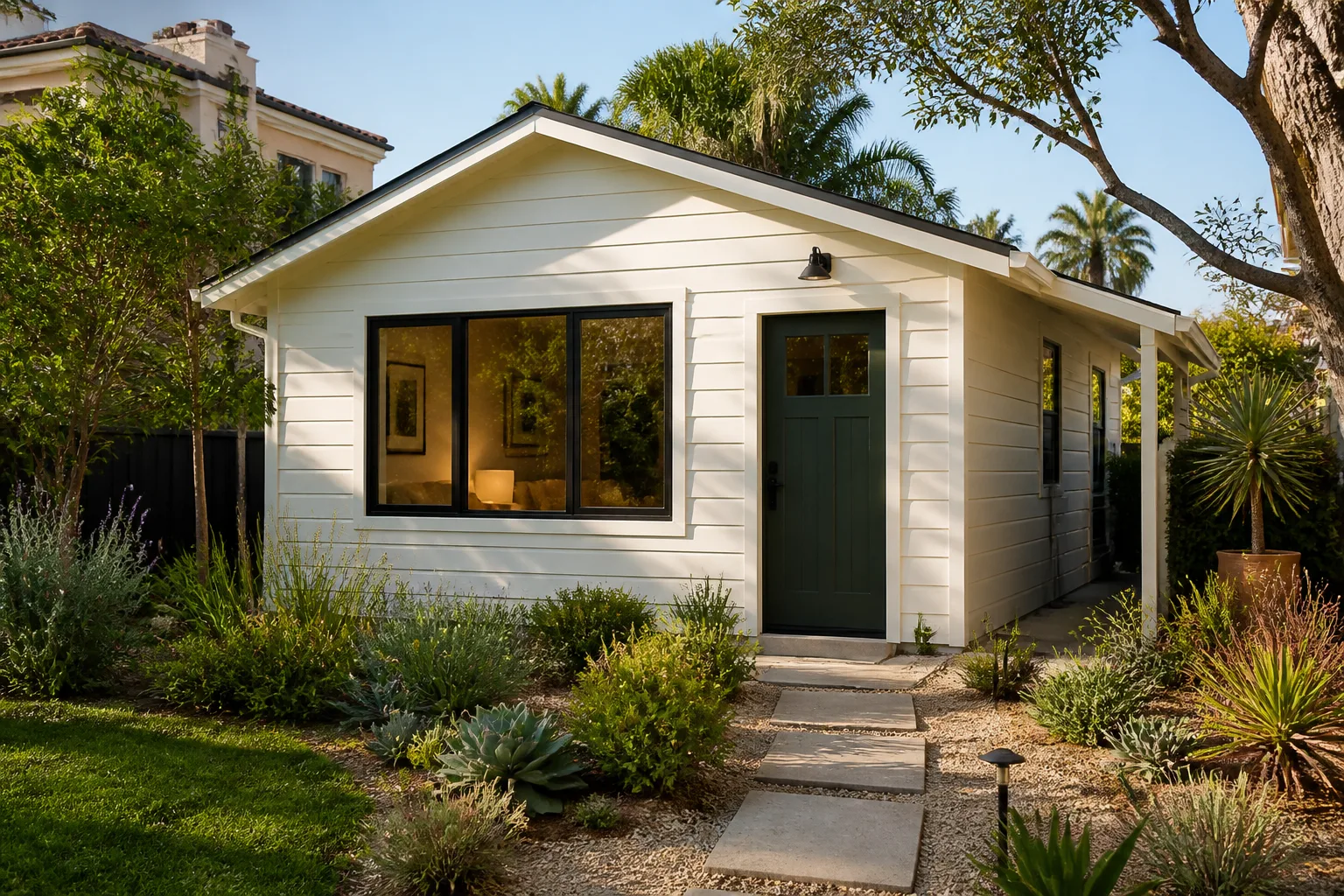
A properly compacted pad with correctly installed and sloped utility stubs should last decades in Woodland Hills. The weak points are usually drainage, soil movement, and shallow water lines, so we address those specifically during installation. In our experience, failures happen early when they happen at all, which is why we inspect everything before the Plant Prefab unit arrives and again after set-down.
Call (559) 249-3776 if you want us to walk your site and point out anything that might shorten the life of your prep work.
Most prep problems can be isolated and corrected without demolishing the whole pad. Low spots can be topped with a leveling overlay in some cases. Drainage can be fixed by cutting a channel and installing a proper swale. Sewer stubs can be repositioned without tearing out the entire foundation. What matters is that the fix addresses the cause, not just the symptom, and that it’s done before the unit arrives. Call us for a free estimate at (559) 249-3776 and we’ll tell you exactly what we’d do.
A straightforward re-stub and leveling job takes two to four working days, including inspection time. A full pad replacement with trenching and utility correction can run two to three weeks in Woodland Hills, depending on soil and weather. We’ll give you a written timeline as part of the written price, and we’ll tell you what each day looks like before the crew shows up. Call (559) 249-3776 to get your project on our schedule.
We keep the common utility stubs, conduit, water-line fittings, and sewer laterals on the truck for Plant Prefab projects, and we can source OEM-spec parts quickly when a specific anchor bolt pattern or transition fitting is needed. We also work with Abodu, Cover, and Dvele units, so the shop knows prefab tolerances across brands. If we don’t have something in hand, we’ll tell you before we order it, with a real lead time and a real price. Call (559) 249-3776 and tell us what your unit’s spec sheet says.
If your Plant Prefab project needs site prep, utility rough-in, or a fix to existing work, call us at (559) 249-3776. We’ll set up a free estimate, walk the lot with you, and give you a written price before any work starts. No surprises, no pressure, no line items appearing after the crew arrives. We’re Seedling ADU Woodland Hills, and we treat your lot the same way we’d treat our own.
Written by Ben Ortega, Owner, Seedling ADU Woodland Hills at Seedling ADU Woodland Hills, serving Woodland Hills and nearby areas.