Last updated October 15, 2026
ADU Cost Breakdown: The Woodland Hills Homeowner’s Reference for 2026
A $180,000 ADU quote that doesn’t include the LADWP service upgrade, soil report, Title 24 energy compliance, and permit fees isn’t a $180,000 project. In Woodland Hills, it’s closer to $225,000, and the difference lives in line items nobody showed you. This guide names every one of those line items, explains why costs in this neighborhood run higher than the LA Basin average, and gives you a planning number you can actually take to the bank. By the time you finish reading, you’ll know more about the real cost structure of an ADU in Woodland Hills than most contractors will volunteer in a first meeting, and you’ll find The Complete Guide to ADU in Woodland Hills a useful companion if you want deeper context on the process.
Quick Answer
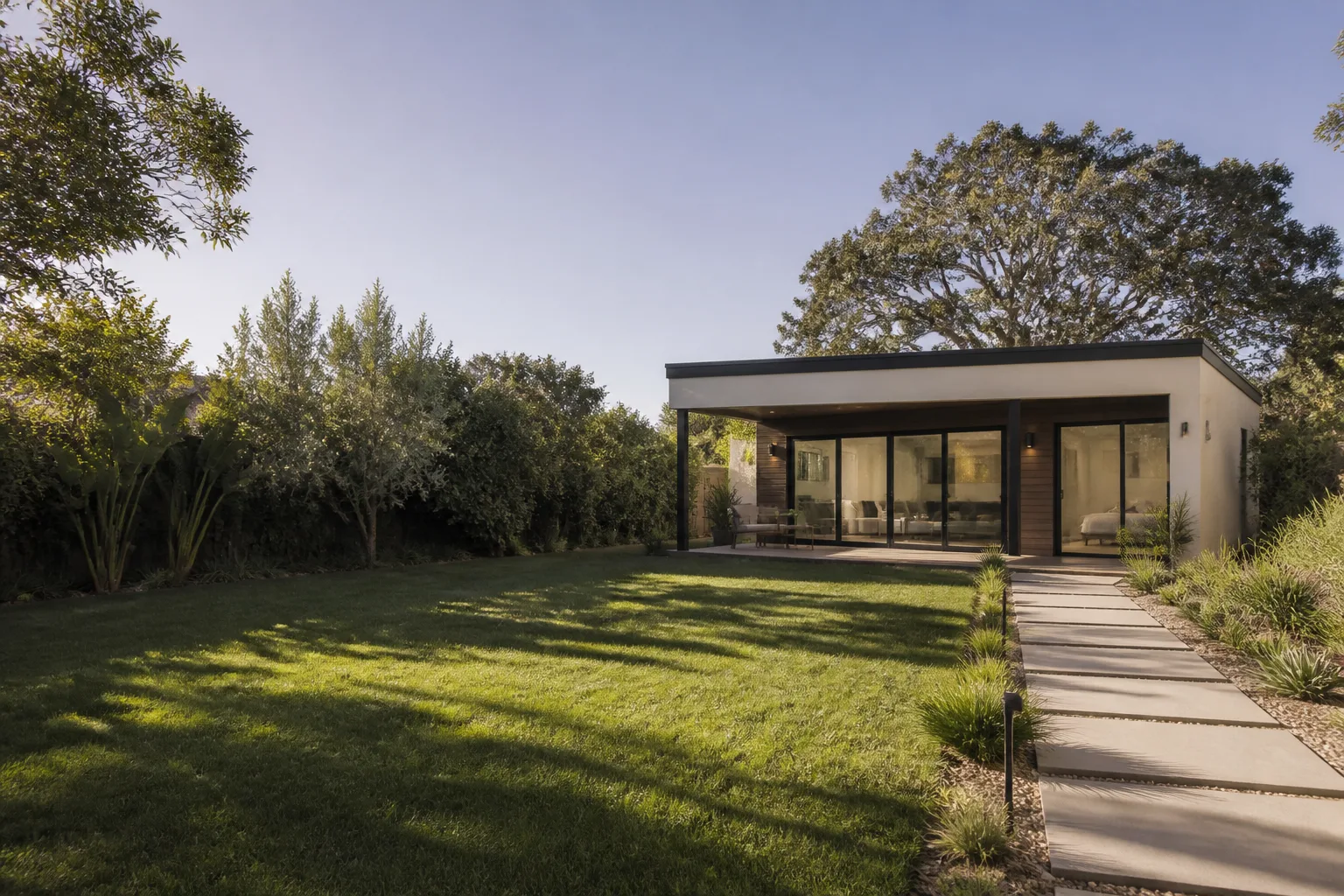
A complete ADU in Woodland Hills in 2026 typically costs between $220,000 and $360,000 all-in, which is 25 – 40% more than the construction-only numbers most homeowners see advertised. The gap comes from design and engineering, hillside soil reports, permit fees, utility upgrades, fire zone material requirements, and landscaping restoration. A detached 500-square-foot one-bedroom built as a stick-frame project on a flat lot will land near the bottom of that range; a two-bedroom modular or prefab unit on a sloped hillside lot with a service panel upgrade will land near the top.
Table of Contents
- The Line-Item Cost Structure: Where Every Dollar Goes
- Why Woodland Hills Costs Run Higher Than the LA Basin Average
- Fixed-Price vs. Cost-Plus Contracts: What Written Pricing Actually Means
- Financing Options and the Payment Schedule That Protects You
- The Cost of Not Building: A 10-Year Opportunity Model
- Prefab, Modular, and Stick-Frame: Cost Implications for Woodland Hills Lots
- Permits, Inspections, and the Timeline That Affects Carrying Costs
- Hidden Line Items Competitors Won’t Mention
The Line-Item Cost Structure: Where Every Dollar Goes
Most quote sheets show three or four numbers. A real budget has at least twelve. Here is what we walk every Woodland Hills homeowner through before we ever put a number on paper, because the difference between a $185,000 quote and a $260,000 actual project is almost always hidden in these line items.
Design and Engineering: $8,000 – $25,000
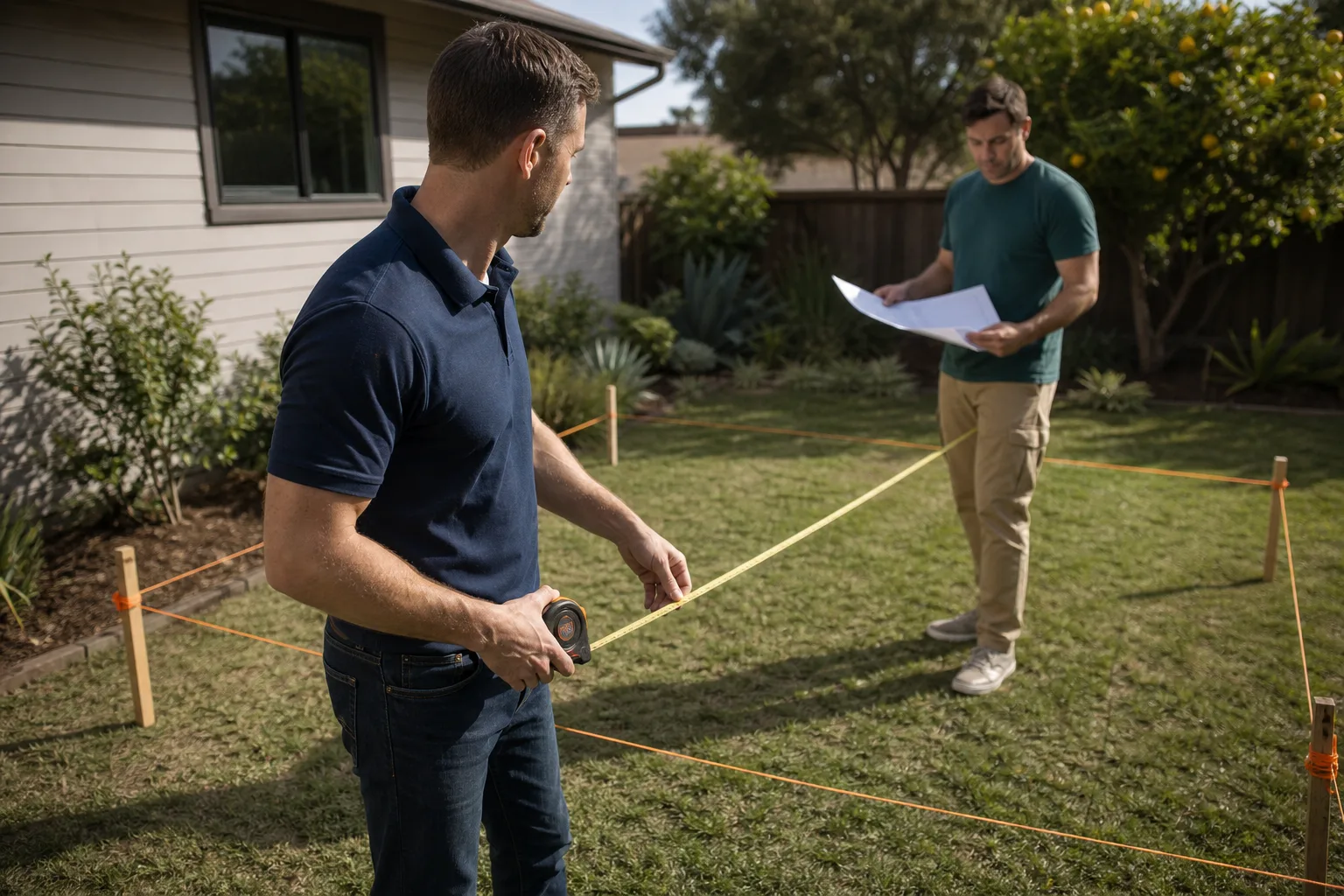
Before a single permit is pulled, your ADU needs architectural drawings, structural engineering, and Title 24 energy compliance documentation. On flat Woodland Hills lots south of Ventura Boulevard, design fees typically run $8,000 to $15,000. On hillside lots north of the Boulevard, where retaining walls, drainage calculations, and slope analysis enter the picture, expect $15,000 to $25,000. Prefab brands like Plant Prefab and Abodu include design in their base pricing, which is one reason we walk families through those options side by side with conventional construction.
Soil and Geotechnical Report: $3,500 – $9,000
Many Woodland Hills lots sit on decomposed granite, clay lenses, or fill soil from original hillside grading. The city of Los Angeles requires a soils report for most ADU permits, and hillside lots almost always require one. A standard geotechnical investigation with one boring runs about $3,500. A deeper report with multiple borings and slope stability analysis runs $6,000 to $9,000. Skip this line item in your planning and the foundation bid will surprise you later.
Permit Fees and School District Assessments: $6,000 – $14,000
The city of Los Angeles building permit fees for a typical ADU run $2,500 to $6,000 depending on valuation. On top of that, LAUSD school impact fees apply to ADUs, currently around $5.60 per square foot for most residential projects, which adds roughly $2,800 to $5,600 on a 500- to 1,000-square-foot unit. Electrical, plumbing, and mechanical sub-permits add another $1,200 to $2,500. Expect the full permit stack to land between $6,000 and $14,000.
Construction Hard Costs: $200 – $380 per Square Foot
This is the number everyone quotes. In Woodland Hills, stick-frame construction on prepared flat lots typically runs $220 to $280 per square foot for a basic unit. Hillside lots, which require deeper foundations, retaining walls, and engineered shoring during excavation, push hard costs to $300 to $380 per square foot. A 600-square-foot ADU at $280 per square foot is $168,000 in hard costs alone, before any of the items above or below.
Utility Connections and Upgrades: $8,000 – $30,000
Connecting your ADU to existing water, sewer, and electrical service sounds simple until the panel can’t handle the load. Many Woodland Hills homes built before 1985 have 100-amp panels, which cannot support a separate dwelling unit. An LADWP service upgrade from 100 amps to 200 amps costs $4,000 to $9,000 including panel replacement and LADWP connection fees. Trenching for new sewer laterals across a hillside lot can add $6,000 to $15,000. Gas line extensions, where the ADU will have its own water heater, add another $2,000 to $5,000.
Landscape and Site Restoration: $3,000 – $12,000
Excavation, material staging, and utility trenching tear up more than the ADU footprint. Re-grading a slope, re-seeding grass, repairing irrigation, and replacing trees or shrubs damaged during construction typically costs $3,000 to $8,000 on flat lots and $8,000 to $12,000 on hillside lots. Contractors who omit this line item are not doing you a favor; they are handing you a surprise.
Contingency: 10 – 15% of Hard Costs
No honest builder quotes a hillside project without contingency. In Woodland Hills, where we regularly uncover buried concrete from old retaining walls or unexpected rock during excavation, a 10% contingency on hard costs is the responsible number. On a $200,000 hard-cost budget, that is $20,000 reserved for the ground you cannot see until you open it. At Seedling ADU Woodland Hills home, we put contingency in writing and refund any unused amount because the money is yours, not a slush fund.
Why Woodland Hills Costs Run Higher Than the LA Basin Average
Woodland Hills sits in a very specific position within the Los Angeles ADU market. The neighborhood is not the flattest part of the Valley, not the coolest, and not the easiest to reach. All three facts show up in the price.
Fire Zone Material Upgrades: 8 – 12% Premium
Portions of Woodland Hills fall within the Los Angeles Fire Department’s Very High Fire Hazard Severity Zone, particularly hillside streets north of Mulholland and around the southern slopes toward the Santa Monica Mountains. That designation changes the materials and methods required. Exterior cladding in these zones typically requires fire-resistant products, and James Hardie fiber cement siding is the material we specify most often because it meets the fire code while holding paint longer than wood in our dry summers. Fire-resistant eave construction, ember-resistant vents, and dual-pane tempered glass windows add roughly 8% to 12% over the baseline builder package, and homeowners in this area should watch for the issues covered in ADU Warning Signs: A Woodland Hills Homeowner’s Reference Guide.
Slope Grading and Hillside Access: 15 – 30% Premium
Get above Ventura Boulevard onto the slopes around Winnetka, Topanga Canyon, and Valley Circle, and the project changes. Equipment access narrows. Excavation requires shoring. Foundation design must account for lateral soil pressure. A flat-lot ADU might need a standard slab on grade; a hillside ADU often needs caissons, grade beams, and a retaining wall engineered by the geotechnical report. That set of requirements adds 15% to 30% to the hard-cost line compared to the same square footage in the central Valley.
Labor Access and Scheduling: 5 – 8% Premium
Woodland Hills is a long, slow drive from the subcontractor hubs toward downtown and Long Beach, and the neighborhood’s hills and gated communities add friction to every material delivery. Subs who work the West Valley price that friction into bids. We typically see a 5% to 8% labor premium compared to ADU projects in North Hollywood or Van Nuys, where crews can move between job sites more quickly.
Fixed-Price vs. Cost-Plus Contracts: What Written Pricing Actually Means
The phrase “written pricing” is used by a lot of contractors. It does not always mean what you think it means. There are two fundamental contract structures, and they produce very different outcomes for your final number.
Cost-Plus Contracts: The Open Checkbook
In a cost-plus arrangement, the contractor passes through the actual cost of materials and labor and adds a percentage fee on top, usually 15% to 20%. The quote shows an estimate, but the final price is whatever the job actually costs. For the contractor, this has a built-in incentive to spend more. For you, it is an open checkbook with no ceiling. Cost-plus is common in custom home building but is a red flag for standard ADU builds where the scope should be predictable after the soils report and permit drawings are done.
Fixed-Price Contracts: The Number Is the Number
A fixed-price contract locks the scope and the number together. The builder has done the engineering math, included contingency, and accepted the risk of price movement on materials. If lumber moves, that is the builder’s problem. If rock appears during excavation, the contingency line covers it, and any use is documented. The key distinction: a fixed price without written contingency is just a smaller number and a bigger fight later. A fixed price with a written contingency and a refund clause is the most honest contract structure available to a homeowner.
Our practice at Seedling is straightforward: written price before any work begins, contingency documented at 10 – 15% of hard costs, and unused contingency refunded at closeout. The families we work with in Woodland Hills often tell us the refund check is the first time a contractor ever handed money back to them. That is the standard every ADU buyer should ask for.
Financing Options and the Payment Schedule That Protects You
ADU financing is not like buying a car. The money moves in stages, and the loan product you choose interacts with the payment schedule a reputable contractor offers. Get these two things aligned before you sign anything.
The Financing Landscape for Woodland Hills ADUs
Three vehicles dominate ADU financing in this market. HELOCs remain popular because rates are tied to prime and draw periods allow you to pay contractors in stages, but you need meaningful equity, which most long-time Woodland Hills owners have. ADU-specific construction loans from lenders like RenoFi and Figure work more like a traditional construction loan with draws tied to inspection milestones, but approval requires a full set of plans and a builder commitment. PACE financing is available in Los Angeles for ADUs but is secured as a property tax assessment and carries a senior lien position, which can complicate refinancing later. None of these are inherently good or bad; the right one depends on your equity, tax situation, and timeline.
The Payment Schedule That Protects You
- Deposit at contract signing: 10% or less. Anything above 10% before work starts puts you at disproportionate risk. In California, contractors are legally limited to 10% or $1,000, whichever is less, on residential projects.
- Design and permit phase payment: 15 – 20% of the contract value. This covers architecture, engineering, soils work, and the permit package. It is paid as those milestones complete, not as a lump sum up front.
- Construction draws tied to inspection milestones. Foundation complete, framing passed, rough mechanical passed, drywall hung, and final inspection. Each draw should correspond to a completed, inspected phase of work.
- Final payment at certificate of occupancy: 10 – 15%. You should hold a meaningful amount, at least 10%, until the city issues the final inspection sign-off and the punch list is done. A contractor who demands full payment before final inspection is asking you to give up your leverage.
For a $260,000 all-in project, that schedule looks like roughly: $26,000 at contract, $45,000 through design and permit, $175,000 in milestone draws across construction, and $14,000 held until the Certificate of Occupancy is in your hand. This is what “written pricing before work begins” means in practice, and it protects both sides of the table.
The Cost of Not Building: A 10-Year Opportunity Model
There is another number worth doing before you decide an ADU is too expensive: the number for not building one. Here is a simple ten-year model for a typical Woodland Hills lot.
A one-bedroom ADU in Woodland Hills rents for $2,500 to $3,200 per month in 2026, depending on proximity to Warner Center, Topanga, and the schools that families specifically target. At $2,800 per month, the ten-year gross rental income is $336,000 before vacancy and management. Assuming 8% vacancy and 20% of gross for taxes, insurance, and maintenance, the ten-year net operating income lands near $255,000.
Now subtract the cost. A $260,000 all-in ADU financed with a $220,000 mortgage at 6.5% for 30 years carries a monthly payment near $1,390, or $166,800 over ten years. Net cash flow over ten years: roughly $88,000. But you have also added somewhere between $200,000 and $300,000 in appraised value to the property, most of it borrower-financed with tenant rent paying the debt service. The ten-year total return, combining cash flow and equity, frequently exceeds $300,000. That is the cost of delay.
More importantly for many Woodland Hills families, the ADU is a new home on your lot. It houses an aging parent, a returning adult child, or the caregiver who makes it possible for both parents to keep working. Some values do not appear on a cap rate.
Prefab, Modular, and Stick-Frame: Cost Implications for Woodland Hills Lots
One decision shapes your budget more than any other: how the unit gets built. Woodland Hills is a market where all three approaches work, but they work differently.
Stick-Frame Construction: $220 – $300 per Square Foot Hard Cost
Traditional on-site framing is the most flexible option and the most common choice for attached ADUs and garage conversions where the existing structure sets the envelope. It accommodates odd lot shapes, hillside retaining walls, and custom rooflines. The downside is time: a stick-frame ADU typically takes 9 to 14 months from design start to occupancy, and every month of construction is a month of carrying cost on your financing.
Prefab Panelized Systems: $230 – $340 per Square Foot Hard Cost
Plant Prefab and similar panelized manufacturers fabricate wall, floor, and roof panels in a factory and assemble on site in days instead of months. Quality control is generally tighter than stick-frame, and the assembly window is dramatically shorter. On flat Woodland Hills lots with good truck access, panelized construction can cut three to five months off the schedule. On hillside lots, factory-built components still require the same foundation, retaining, and utility work as stick-frame, so the savings narrow.
Factory-Built Modular Units: $250 – $380 per Square Foot Hard Cost
Fully modular units from Abodu arrive as finished modules and get craned into place. The pricing typically includes a defined finish package, which removes a lot of the change-order risk common in stick-frame builds. The catch is access: a crane needs to reach your lot, which rules out many hillside properties in Woodland Hills where overhead utility lines or narrow streets block delivery. Where the lot works, modular is often the fastest path to occupancy.
Garage Conversions: $120 – $220 per Square Foot Hard Cost
Converting an existing garage skips foundation and framing, which is why the per-square-foot number drops so much. A 400-square-foot garage conversion in Woodland Hills typically lands between $50,000 and $90,000 all-in when the slab is in good condition and the roof is structurally sound. But not every garage qualifies. Pre-1970 garages often have slab thickness too thin for conversion, and detached garages in fire zones may need envelope upgrades to meet current code. We help families evaluate that decision in detail through our Garage Conversion Contractor in Woodland Hills work, but the short version is: get a structural assessment before you fall in love with the per-foot number.
Permits, Inspections, and the Timeline That Affects Carrying Costs
Time is a cost item. Every month between your first design payment and your first rent check is a month of interest, a month of property tax not offset by income, and a month of construction activity in your yard. In Woodland Hills, here is what the calendar actually looks like.
Design and Engineering: 2 – 4 Months
Architectural drawings, structural engineering, Title 24 energy compliance, and soils work. Prefab brands compress this because the design library already exists. A Tuff Shed studio shell at the simpler end can move through this phase in weeks rather than months, which matters for families who need a home office or in-law suite on a shorter horizon.
City of Los Angeles Permit Review: 2 – 6 Months
LADBS review times for ADUs have shortened under state streamlining laws, but hillside lots with grading triggers and fire zone requirements still move slower than flat-lot projects. A simple garage conversion might clear in 60 days. A hillside detached ADU with retaining walls and a geotechnical report often takes four to six months. Plan for it.
Construction: 6 – 12 Months
Prefab and modular are fastest; stick-frame on hillside lots is slowest. Assuming no weather delays, which is mostly true in Woodland Hills between June and October, a 600-square-foot unit should finish in six to eight months. Add the fire zone material inspections and any LADWP service upgrade coordination, and a nine-to-twelve-month construction window is realistic for larger units.
Total: 10 – 16 Months From First Call to Keys
Carrying cost on a $220,000 loan at 6.5% is roughly $1,200 per month in interest-only terms. A sixteen-month timeline versus a ten-month timeline adds about $7,200 in interest before the tenant moves in. That is not a reason to rush; it is a reason to budget accurately for the full calendar, not the optimistic one.
Hidden Line Items Competitors Won’t Mention
These are the costs that appear after the contract is signed and the crew has started. None of them are exotic. All of them are predictable, which is why a real professional writes them into the price before the first shovel touches dirt.
- Utility plan check and connection fees. LADBS plan check fees for electrical, plumbing, and mechanical are separate from the building permit. LADWP charges a connection fee for new service drops. Together they typically run $1,500 to $4,000 on top of the permit stack.
- Fire sprinkler requirements. ADUs detached from the main dwelling in certain Los Angeles fire zones require residential fire sprinklers. This adds $8,000 to $15,000 and requires coordination with LADWP water pressure.
- Sound attenuation if the ADU is rental. Proximity to the Ventura Freeway or Topanga Canyon Boulevard means some Woodland Hills ADUs need upgraded glazing or wall insulation to meet the city’s noise ordinance. Budget $3,000 to $8,000 when the lot backs up to a major thoroughfare.
- Solar readiness. California’s Energy Code requires most new ADUs to be solar-ready, even if panels are not installed. That means conduit, structural reinforcement, and panel capacity, adding $2,000 to $5,000.
- Tree protection and pruning. Woodland Hills lots often have mature oak and eucalyptus trees that LADBS protects. Tree protection fencing, root zone management, and arborist reports add $1,500 to $4,000 when mature trees sit within the project envelope.
The point of this list is not to scare you. It is to make sure the number in your spreadsheet is the number in reality. Our job as ADU Builders in Woodland Hills is to show you the whole picture before you commit to it.
Common Mistakes to Avoid
- Comparing construction-only numbers. One builder says $180,000 and another says $240,000 for the same square footage, and the difference is usually that the first number excludes design, permits, utility work, and contingency. Compare all-in numbers or don’t compare at all.
- Signing before the soils report comes back. On Woodland Hills hillside lots, the geotechnical report is the single biggest driver of foundation cost. A builder who prices before the report is guessing, and you are the one who pays for a wrong guess.
- Choosing cost-plus without a cap. A cost-plus contract with no guaranteed maximum is an open checkbook. If you agree to cost-plus, put a not-to-exceed number in the contract and require written approval for anything that pushes past it.
- Ignoring the panel. A 100-amp panel will not serve a dwelling unit with an electric heat pump, stove, and laundry. The upgrade happens on every ADU job with an older home. Budget for it before you fall in love with the floor plan.
- Forgetting the restoration line. Excavation and trenching destroy landscaping. If your contract doesn’t include restoration, you will write that check yourself after the crew leaves.
- Paying too much up front. California caps residential contractor deposits at 10%. A builder asking for 30% or 40% before work starts is telling you something important about their financial stability.
When to Call a Professional
If you have a lot on a slope, a garage you suspect is under-structured, a panel from the 1970s, or a quote in hand that looks too clean to be honest, call someone who will walk the property before they talk numbers. Specific moments worth a call: you have received two quotes more than $80,000 apart and cannot see why; your lot is in a fire hazard zone and the quote does not mention cladding requirements; the soils report came back and the contractor is not adjusting the foundation design. Home Addition Contractor in Woodland Hills expertise carries over directly here, because the same slopes and soils that challenge additions challenge ADUs. Seedling ADU Woodland Hills offers free estimates in Woodland Hills, call (559) 249-3776.
Frequently Asked Questions
A complete ADU in Woodland Hills typically costs $220,000 to $360,000 all-in, including design, permits, utilities, contingency, and restoration. Construction-only numbers run $150,000 to $260,000 for a typical 500- to 800-square-foot unit. For an exact number on your lot, call (559) 249-3776 for a free written estimate.
On a fixed-price contract with a written contingency and refund clause, the price should not change unless the scope changes. Change orders happen when the homeowner adds square footage, upgrades finishes, or the ground reveals something the soils report could not see. Ask for written approval on every change before work proceeds.
Attached garage conversions on flat lots often proceed without a geotechnical report because the existing foundation is already permitted and proven. Detached conversions and any project on a hillside lot typically require one. The city’s position depends on the specific site conditions, and LADBS will flag it during plan review if they want one.
Plan on 10 to 16 months from first design meeting to Certificate of Occupancy. Prefab and modular units shorten the construction window but not the permit review, which runs 2 to 6 months in Los Angeles for hillside lots and fire zone projects.
HELOCs work well for homeowners with meaningful equity and offer draw flexibility. ADU-specific construction loans provide higher leverage but require full plans and a builder commitment. PACE financing is available but the senior lien position complicates future refinancing. Your lender and your contractor’s payment schedule need to talk to each other before you sign.
It depends entirely on the company. Ask specifically about shoe covers, drop cloths, daily clean-up, and whether the products used are pet-safe when there is a choice. A builder who cannot answer those questions clearly is telling you how the finished product will be treated.
The Bottom Line
The real cost of an ADU in Woodland Hills is almost never the number on the first quote. It is the number you arrive at once design, soils, permits, utilities, fire zone materials, contingency, and restoration are all in the same column. That number for 2026 is $220,000 to $360,000 for most projects, and the best defense against surprise is a written fixed price with documented contingency and a builder who shows you every line before you commit. The home you add to your lot will serve your family for decades; the clarity you demand at the start should match that timeline. For more guides & resources on planning and building ADUs throughout the region, explore our blog.
Written by Ben Ortega, Owner at Seedling ADU Woodland Hills, serving Woodland Hills since 2001.